What is Padel? A Complete Guide for New Players in Western Sydney
If you’ve been hearing the buzz about padel and wondering why everyone is talking about it, you’re not alone. The sport is one of the fastest-growing in the world and is now making waves in Western Sydney. With new courts, clubs, and communities forming, more people are discovering that padel is not only exciting to play but also incredibly social.
In this guide, we’ll cover:
What padel is and why it’s different from tennis or squash.
How big a padel court is compared to other racquet sports.
Where padel originated and how it has spread globally.
Whether you’re curious as a beginner or already planning to hit the courts in Western Sydney, this article will give you the full picture.
What is Padel?
Padel is a racquet sport that combines elements of tennis and squash, played on an enclosed court with glass and mesh walls. The game is almost always played in doubles, making it highly social and accessible.
Unlike tennis, the serve is underarm, and the walls are part of the game — meaning rallies last longer and beginners can quickly join in without feeling overwhelmed. The court size is smaller than a tennis court, making the game easier to pick up, while still being fast-paced and exciting.
Key features of padel:
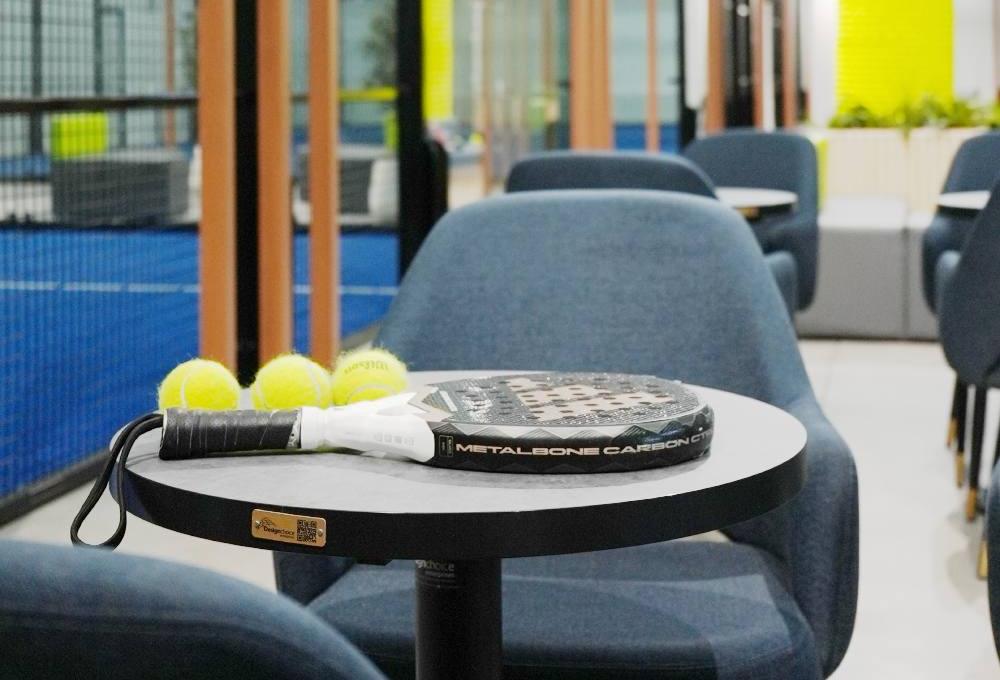
Played with a solid, stringless racquet (lighter than a tennis racquet).
Uses a low-compression ball, similar to a tennis ball but slightly less bouncy.
Games are played in doubles format (2 vs 2).
Walls are in play, allowing creative shots and longer rallies.
At its heart, padel is a sport about community. That’s why clubs in Western Sydney are attracting players of all ages — it’s easy to learn, fun to play, and designed for social connection.
How Big is a Padel Court?
One of the most common questions for newcomers is: how big is a padel court?
A standard padel court is:
10 metres wide
20 metres long
Divided in the middle by a net.
This is roughly one-third the size of a tennis court, making it much more manageable for beginners. The smaller size means less running back and forth, but don’t be fooled — the walls, angles, and doubles play make padel fast, tactical, and energetic.
Court Features
The court is enclosed with glass walls at the back and sides. These walls are part of the game, so balls can bounce off them and still be in play.
The floor is usually made of artificial turf for grip and comfort.
Like tennis, there are service boxes, but serves are underarm and must bounce before hitting the opposite box.
Why Court Size Matters
The smaller, enclosed court is a big reason padel has exploded in popularity worldwide. Unlike tennis, which can be intimidating for beginners, padel allows people of different fitness levels and ages to enjoy long rallies. This is exactly why Western Sydney is seeing such growth in new padel venues — the sport is inclusive and appeals to families, friends, and communities.
Where Did Padel Originate?
Padel originated in Mexico in 1969, when Enrique Corcuera built the first court at his home in Acapulco. He wanted to adapt tennis for a smaller space, so he designed a 20×10 metre court with walls that kept the ball in play. What started as a backyard invention soon spread to Spain and Argentina, where the sport really took off.
By the 1990s, Spain had embraced padel as a national pastime, and today it is one of the country’s most popular sports, second only to football. Argentina also became a powerhouse in the sport, producing many of the world’s top players.
The Global Growth of Padel
Spain: Now has over 20,000 courts.
Argentina: Millions of players enjoy the sport.
Europe: Countries like Sweden, Italy, and France have booming padel communities.
Australia: The sport is still new but growing fast, with venues opening in cities including Sydney, Melbourne, and Brisbane.
Here in Western Sydney, padel is beginning to capture attention. With the region’s strong sporting culture and community spirit, it’s the perfect environment for this exciting sport to grow.
Why is Padel So Popular in Western Sydney?
Padel’s rise in Western Sydney comes down to three main factors:
Accessibility – The smaller court and underarm serve make the sport less intimidating than tennis. Beginners can pick it up quickly, while experienced players still find it challenging.
Social Experience – Because it’s played in doubles, padel is inherently social. It’s about teamwork, laughter, and connection as much as competition.
Fitness Without Intensity – Padel provides a great workout, but it’s lower impact on the body compared to sports like tennis or squash. This makes it ideal for players of all ages, including kids and adults looking for a fun new activity.
The opening of new venues in Western Sydney has only accelerated interest, with locals discovering the mix of sport and community that padel offers.
Padel vs Tennis vs Squash
To understand padel better, it helps to compare it to other racquet sports:
Padel vs Tennis: Padel courts are smaller, and the game relies more on tactics than power. Rallies are longer because of the walls.
Padel vs Squash: While squash is played indoors with a small ball and intense pace, padel is outdoors (or semi-outdoors) with a lighter ball and more relaxed gameplay.
This mix of speed, skill, and strategy is why padel has become a global sensation.
The Future of Padel in Western Sydney
With new clubs and facilities opening, Western Sydney padel is set to grow rapidly over the next few years. The sport is already hugely popular in Europe and South America, and Australia is catching up quickly.
Venues in the region are building not just courts, but entire communities — offering coaching, social nights, and competitions. This ensures that padel is not just a sport, but a lifestyle for many locals.
FAQs About Padel
How many players are needed for padel?
Padel is almost always played in doubles with four players. Singles is possible but less common.
Can padel be played indoors?
Yes, padel can be played both indoors and outdoors. In Western Sydney, many venues are building outdoor courts to take advantage of the climate.
Will padel become an Olympic sport?
Padel is under consideration for future Olympics, with hopes it could be included by 2032. Its rapid growth worldwide makes this a real possibility.
Final Thoughts
Padel is more than just another racquet sport — it’s a global movement now making its mark in Western Sydney. With its mix of fun, fitness, and community, padel offers something unique for players of all ages.
“
If you’re looking for a sport that’s easy to pick up, social, and exciting, padel might just be the perfect choice. As more courts open across Western Sydney, there’s never been a better time to get involved.
The Padel lounge