
About
Welcome to The Padel Lounge Western Sydney — the home of community, competition, and connection. We’re more than just a sports venue; we’re a lifestyle hub built around the world’s fastest-growing sport. Whether you’re picking up a racket for the first time or chasing your next championship point, The Padel Lounge is where fun meets fitness in a vibrant, social atmosphere.
At the heart of Western Sydney’s thriving sports culture, our purpose-built padel courts bring international standards to local players. Designed for all skill levels, our venue blends modern facilities with relaxed lounge-style comfort — the perfect place to play, unwind, and connect. From after-work games and social leagues to coaching sessions and weekend tournaments, there’s always something happening at The Padel Lounge.
Our
Mission
Our mission is simple: to grow the game of padel in Australia by creating an inclusive, welcoming community. We’re passionate about introducing Western Sydney to this global sport — one that’s easy to learn, exciting to play, and impossible not to love. Step inside The Padel Lounge and discover why padel isn’t just a sport… it’s a movement.
Our
history
The idea for The Padel Lounge Western Sydney was born from a simple passion — to bring one of the world’s fastest-growing sports to one of Australia’s most energetic regions. After seeing padel explode across Europe and South America, our founders knew it was only a matter of time before Sydney caught the wave. What started as a few casual games overseas quickly became a vision to create a premium padel destination that celebrates community, culture, and competition right here in Western Sydney.
From concept to construction, The Padel Lounge has been built with players in mind. Every court, surface, and space has been designed to deliver an authentic, world-class padel experience. But beyond the game itself, our story is about people — locals coming together to play, socialise, and share in something new. We’re proud to be part of Western Sydney’s sporting evolution, and our journey is only just beginning.
Amenities
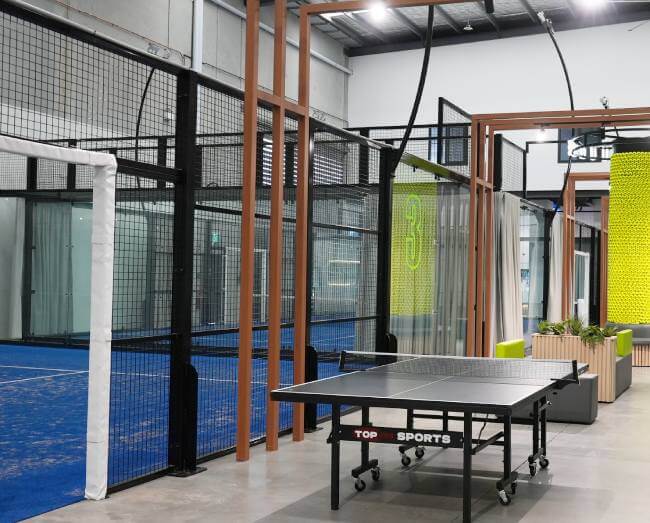
- Indoor courts
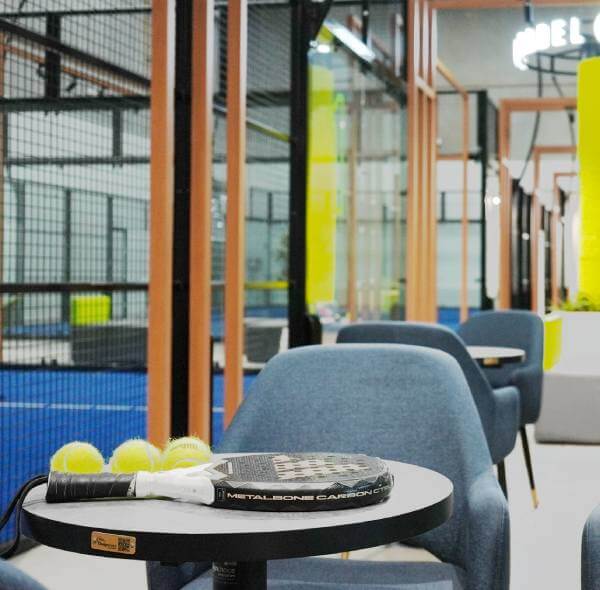
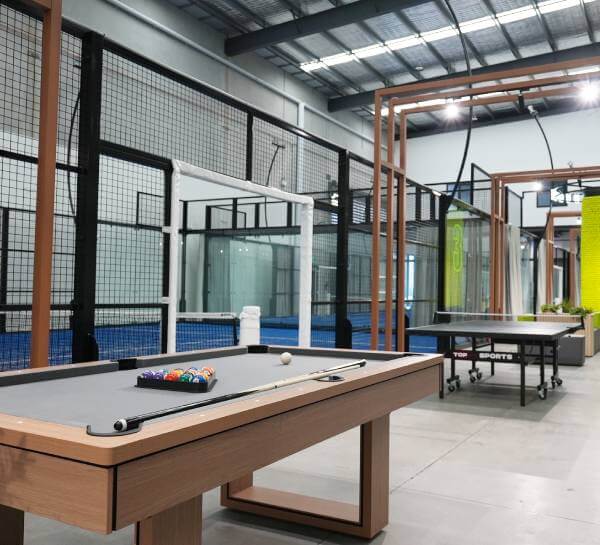
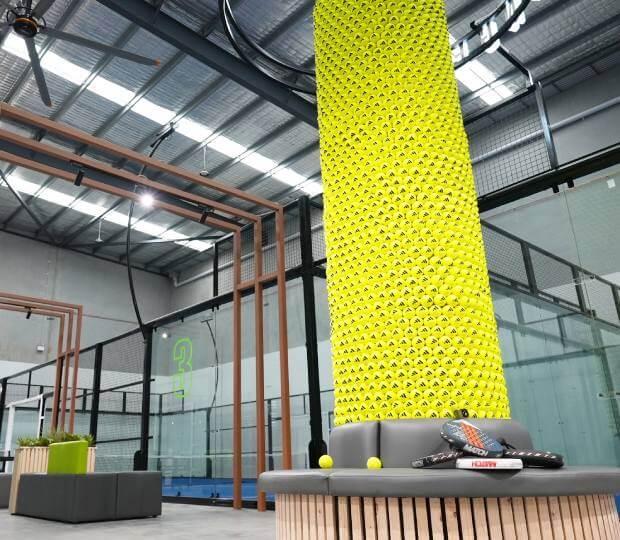
- Lounge zones
- Cafe with WIFI
- Keyless entry
- Easy booking
- Air Conditioned
- Industrial fans
- Lots of parking
- Members area
- TVs for latest games
- Padel scoreboards
- Programs for everyone
THE PADEL LOUNGE'S SPACE
FAQ
If you’re curious about Western Sydney Padel and how it stacks up against tennis or squash, you’re not alone. Padel is one of the fastest-growing sports worldwide, and many players are discovering why it’s easier to learn, more social, and just as competitive as traditional racket sports. Here’s a breakdown of the main differences:
1. Court & Walls
Padel: Played on an enclosed court (roughly one-third the size of a tennis court). Glass and mesh walls are part of the game—like squash, balls can bounce off them to continue rallies.
Tennis: Open court, no walls. If the ball goes out, the point ends.
Squash: Indoor courts where every wall is used continuously.
👉 The unique court design is one reason Western Sydney Padel clubs are attracting players who want something fresh, dynamic, and fun.
2. Equipment
Padel: Uses a solid racket with no strings (perforated with holes) and a slightly lower-pressure ball than tennis.
Tennis: Strung racket with pressurized tennis balls.
Squash: Smaller strung racket with a soft ball that bounces less.
3. Serving
Padel: Always served underarm, below waist height, after the ball bounces once.
Tennis: Powerful overarm serves are the norm.
Squash: The ball must hit the front wall and land in the correct service box.
This makes Western Sydney Padel especially beginner-friendly, as serving is simple and easy to master.
4. Style of Play
Padel: Doubles is the standard format (2 vs 2). The walls keep rallies alive, making points longer, more tactical, and fun.
Tennis: Both singles and doubles are played. Power and precision dominate, and rallies are generally shorter.
Squash: Extremely fast-paced, with constant wall play and high physical demands.
5. Accessibility
Padel: Quick to pick up, social, and suited for all ages. This is why Western Sydney Padel courts are filling up with beginners, families, and seasoned athletes alike.
Tennis: More technical and demanding to master, especially with serving.
Squash: High fitness levels required; a sharper learning curve.
If you’ve recently discovered Western Sydney Padel, you might be wondering where this exciting sport actually came from. Padel may feel like a brand-new game, but it already has a rich history spanning more than 50 years.
The Origins of Padel
Where: Padel originated in Acapulco, Mexico in 1969.
Who: The sport was created by Enrique Corcuera, who adapted his home tennis court by adding walls and making the playing area smaller.
Why: Corcuera wanted a fun, social game that could be played with family and friends in a smaller space.
This innovation laid the foundation for padel as we know it today.
Growth in Spain and Beyond
Padel quickly spread from Mexico to Spain in the 1970s, where it exploded in popularity. From there, it reached Argentina, Europe, and the Middle East. Now, it’s one of the fastest-growing sports in the world.
Western Sydney Padel Today
Fast forward to today, and Western Sydney Padel is part of this global boom. Just like in its early days, the sport thrives on being social, accessible, and fun. With smaller courts, longer rallies, and easy-to-learn rules, it’s a sport anyone can pick up—just as Enrique Corcuera intended back in 1969.
Why This Matters
Knowing where and when padel originated helps explain why it’s growing so rapidly worldwide and why communities like Western Sydney Padel are embracing it. The sport was born to bring people together—and that’s exactly what it continues to do.
Official Padel Court Dimensions
Length: 20 metres
Width: 10 metres
Playing Area: Enclosed by glass and mesh walls, which are part of the game
Net Height: 88 cm in the middle, rising to 92 cm at the posts
This makes a padel court about one-third the size of a tennis court, creating a more intimate, social, and fast-paced game.
Why Court Size Matters
The smaller court keeps players closer together, encouraging teamwork and communication.
Walls mean the ball stays in play longer, leading to exciting rallies.
Beginners find it easier to cover the space compared to a tennis court.
👉 These features are exactly why Western Sydney Padel is attracting new players—rallies are longer, games are more engaging, and the court is designed for fun.
Western Sydney Padel Courts
Local Western Sydney Padel courts follow the international standard dimensions, so you’ll experience the same game loved in Spain, Argentina, and around the world. Whether you’re stepping on court for the first time or looking for competitive matches, the court size makes padel accessible to everyone.
If you’re getting started with Western Sydney Padel, one of the first things you’ll notice is that the scoring system is very similar to tennis. This makes it easy for players to transition from other racket sports while keeping padel simple and fun to learn.
Padel Scoring Basics
Points: 15, 30, 40, game (same as tennis).
Games: A set is won by the first pair to reach six games, with at least a two-game lead (e.g., 6–4).
Sets: A padel match is usually best of three sets.
Deuce & Advantage: At 40–40, play continues until one side gains a two-point advantage.
👉 Just like tennis, this familiar format helps new players at Western Sydney Padel quickly understand the rules.
Tie-Breaks in Padel
If a set reaches 6–6, a tie-break is played. The first pair to reach 7 points with at least a two-point lead wins the tie-break (and the set).
Key Differences from Tennis
Serve: In padel, serves are always underarm and below waist height.
Walls: Rallies are often longer, thanks to the ball rebounding off glass and mesh walls.
Standard Play: Doubles is the default format, unlike tennis where singles is also common.
These differences make games at Western Sydney Padel more social, engaging, and full of exciting rallies.
Why the Scoring System Works for Padel
The use of a tennis-style scoring system ensures padel feels both familiar and accessible. Combined with the smaller court and longer rallies, it creates a sport that’s competitive but always enjoyable. Whether you’re new to racket sports or a seasoned player, the scoring system at Western Sydney Padel keeps games easy to follow and fun to play.
1. Padel Racket
Unlike tennis, padel rackets have no strings.
They’re solid, perforated with holes, and slightly smaller than tennis rackets.
Different rackets suit different playing styles—control, power, or balance.
👉 At Western Sydney Padel, many players start with entry-level rackets that are easy to handle, then upgrade as they improve.
2. Padel Balls
Padel balls look very similar to tennis balls.
The main difference is that they have slightly lower pressure, making them bounce less and better suited to padel’s smaller courts and wall play.
Most Western Sydney Padel venues provide balls, but having your own set is always handy.
3. Padel Shoes
The best shoes for padel are designed for grip, stability, and quick changes of direction.
Tennis or indoor court shoes can work, but dedicated padel shoes have soles built for artificial turf with sand infill (the standard padel surface).
Good shoes reduce the risk of slipping and injury.
Optional Extras
Grip tape for comfort and sweat absorption.
Wristbands or gloves if you prefer extra support.
Protective eyewear (less common but useful for beginners).
Getting Started at Western Sydney Padel
The essential gear—racket, balls, and shoes—is all you need to start playing. Many Western Sydney Padel clubs even offer racket hire and supply balls, so you can try the sport before investing in your own equipment.
If you’re starting out at Western Sydney Padel, one of the biggest decisions you’ll make is choosing the right racket. Unlike tennis rackets, padel rackets are solid, stringless, and come in different shapes and weights. The right choice depends on your experience, playing style, and comfort.
1. Racket Shape
Padel rackets generally come in three shapes:
Round: Best for beginners. Larger sweet spot, more control, and easier to handle.
Teardrop: Balanced option. Mix of control and power, good for intermediate players.
Diamond: Power-focused. Smaller sweet spot, suited for advanced players with precision.
👉 At Western Sydney Padel, most beginners start with round rackets for control and confidence.
2. Weight
Lightweight (350–370g): Easier to swing, good for control and reducing strain.
Heavier (370–390g): Generates more power, but requires stronger technique.
Players at Western Sydney Padel often choose a mid-weight racket for all-round play.
3. Balance
Head-heavy: Adds power, but less control.
Head-light: More maneuverability, great for quick reactions.
Even balance: A safe choice for beginners and versatile players.
4. Core Material
Soft EVA Foam: More bounce, comfort, and control. Great for beginners.
Hard EVA or Hybrid: More durability and power, suited to experienced players.
Choosing the Right Racket at Western Sydney Padel
When selecting your racket, think about your skill level, preferred style of play, and physical comfort. Beginners at Western Sydney Padel will benefit from lightweight, round-shaped rackets with soft cores, while advanced players may prefer diamond-shaped, head-heavy rackets for added power.
Key Differences Between Padel Balls and Tennis Balls
Pressure & Bounce
Padel balls have slightly lower internal pressure, which means they bounce less than tennis balls.
This reduced bounce makes rallies easier to control on the smaller padel court.
Size & Weight
Padel balls are very similar in size and weight to tennis balls.
Regulations state a padel ball should have a diameter of 6.35–6.77 cm and weigh 56–59.4 g—almost identical to tennis.
Surface & Durability
Both balls are covered in felt, but padel balls are designed for play on artificial turf courts with sand infill.
This surface wears them differently compared to a hard tennis court.
Can You Use Tennis Balls in Padel?
While you could technically use tennis balls, it’s not recommended. Tennis balls bounce too high and too fast for the smaller court and wall play, which changes the dynamics of the game.
👉 That’s why Western Sydney Padel always uses official padel balls, ensuring fair play and the right feel for rallies.
The Bottom Line
Padel balls and tennis balls may look the same, but the difference in pressure and bounce makes a big impact. Using the right balls at Western Sydney Padel guarantees the best playing experience—longer rallies, more control, and the true spirit of the game.
A standard padel match is played as doubles, meaning you need 4 players (2 per team). This is the official and most common format at any Western Sydney Padel centre.
Technically, you can play 1-on-1, and some players do this for practice or casual games. However, at Western Sydney Padel, singles matches are less common because:
The court is smaller than a tennis court, so one player must cover more ground.
The game is faster and requires more stamina since each player has to cover the whole court.
Some casual players may adapt the rules slightly to keep rallies going.
While singles is possible, doubles is the standard for competitive play at any Western Sydney Padel facility.
Padel has become extremely popular because it’s easy to learn, social, and fun for players of all ages and skill levels. Unlike tennis, the smaller court and wall usage make rallies longer and more exciting, keeping players engaged. Its fast-paced but low-impact gameplay appeals to beginners and experienced athletes alike.
At Western Sydney Padel, the social and community aspect also plays a big role—players can enjoy doubles matches, meet new people, and participate in tournaments, making the sport as much about connection as competition.
As of September 2025, padel is not yet an Olympic sport. However, there is growing momentum for its inclusion in the 2032 Summer Olympics in Brisbane.
Why Isn’t Padel in the Olympics Yet?
For a sport to be included in the Olympics, it must meet several criteria set by the International Olympic Committee (IOC). Padel is making progress but hasn’t fully met all requirements yet. The International Padel Federation (FIP) is actively working towards fulfilling these criteria, aiming for inclusion in Brisbane 2032. losbergerdeboer.comPadel Alto
What’s Needed for Olympic Inclusion?
To be considered for the Olympics, padel must:
Be played in at least 75 countries across four continents.
Have a recognized international governing body.
Adhere to the Olympic Charter and anti-doping regulations.
Receive approval from the IOC at least seven years before the event.
While padel has made significant strides in global participation and governance, it still needs to meet the geographical and IOC approval timelines to be considered for Brisbane 2032. VEAPadel Alto
The Path Forward
The FIP is collaborating with organizations like Premier Padel and the Hexagon Cup to enhance global participation and visibility. These efforts aim to strengthen padel’s case for Olympic inclusion. SportsPro
While it’s uncertain whether padel will be included in the 2032 Olympics, the sport’s rapid growth and increasing global presence make its Olympic future a possibility.