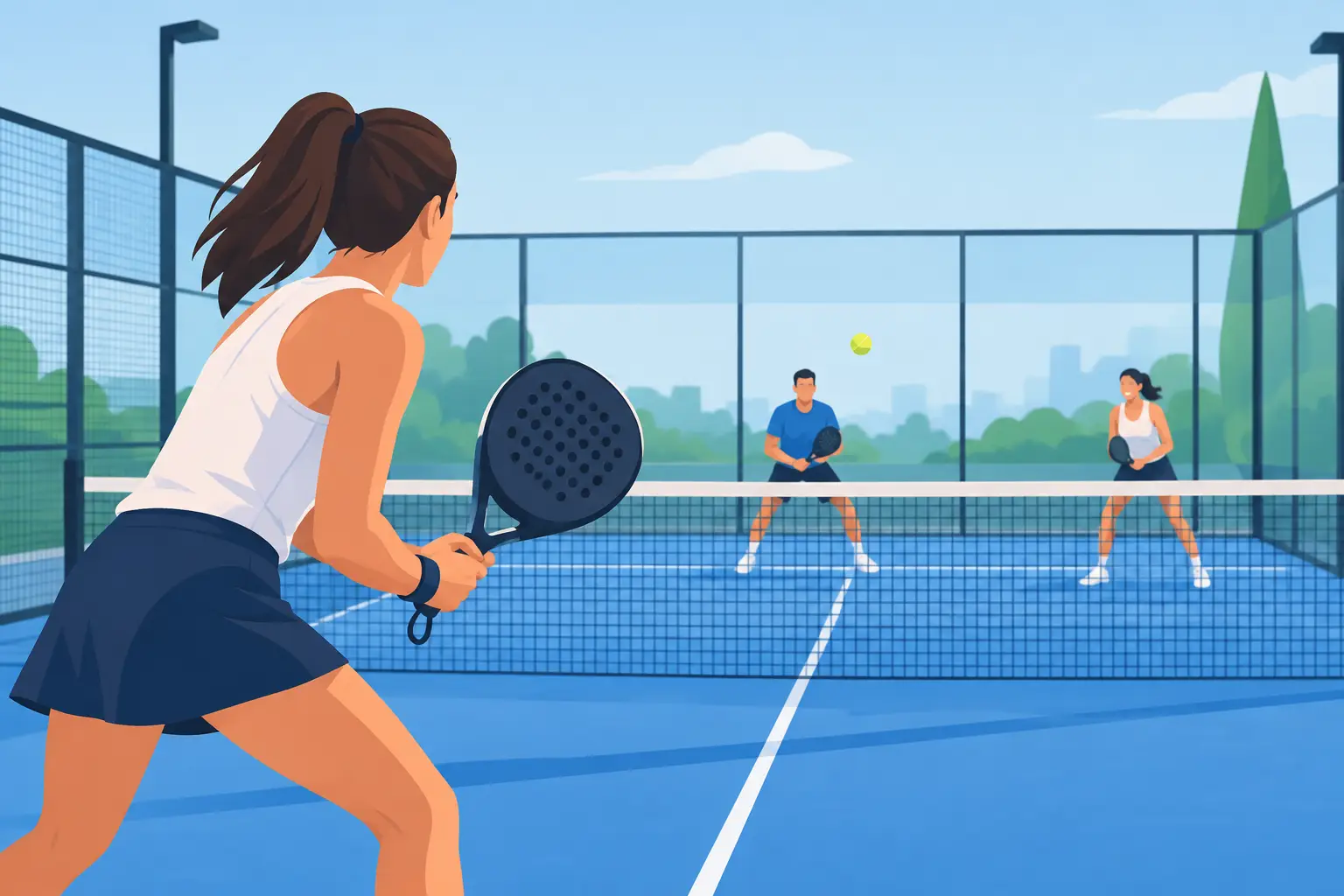
A standard doubles match is great – until 10 mates arrive, two people are stuck waiting and someone starts checking their mobile. The best padel games for groups solve that problem. They keep rotations sharp, rallies flowing and every level of player part of the action.
Padel is made for shared competition. The court is compact, the walls keep points alive and a clever format can turn a casual hit into a fun, fast, furious social session. Whether you have six players after work, a dozen for a birthday or a mixed group of first-timers and regulars, the right game makes the difference.
Best Padel Games for Groups: Start With the Right Format
Before picking a game, look at three things: how many players you have, how long you have the court and how mixed the ability levels are. A short, rotating format is usually better than a full set when more than four players want in. Everyone gets meaningful court time, nobody needs to sit out for half an hour, and the energy stays high.
For a group new to padel, favour games with simple scoring and quick restarts. For experienced players, add a points table, timed rounds or a finals match. The goal is not to make every game serious. It is to give the session enough structure that it feels exciting from the first serve to the last point.
1. Padel Americano
Padel Americano is the benchmark group format for good reason. Every player changes partner and opponent across a series of short rounds, earning individual points rather than relying on one fixed teammate. It is social, competitive and brilliant for groups where players do not all know each other.
Set a target number of points per round, such as 16 or 20, then rotate according to a draw. If your group has eight players, you can run several quick rounds and keep a running individual leaderboard. Players love the moment they realise a close final round can move them up the table.
The trade-off is organisation. Someone needs to manage rotations and scores, especially with more than one court. But once the format is set, it delivers maximum variety with minimum downtime. It is also one of the fairest ways to mix stronger and newer players.
2. Mexicano
Mexicano takes the Americano idea and adds pressure. Players begin with a random draw, then the next round is based on the current standings. Those near the top play each other, while players further down get competitive matches against people at a similar level.
This makes it a top choice for regular groups that enjoy a proper challenge. A beginner who has a tough first round is not doomed to keep facing the strongest pair all night. As the session progresses, the match-ups naturally become closer.
Keep rounds short, usually 15 to 20 points, so rankings can shift often. The format works best when players understand that a rough start is just part of the game. The late rounds are where the drama builds.
3. King or Queen of the Court
Want instant intensity without a score sheet full of calculations? Play King or Queen of the Court. One pair starts on the champion side. Challengers enter on the other side, and the winning pair either holds the court or moves up to the champion end.
You can play first to five points, first to seven, or use a three-minute timer. Short games are the secret. A pair that loses rotates out quickly, giving the next team a shot and stopping one dominant duo from owning the court all session.
This format suits groups with six to 10 players and works especially well as a high-energy finish. It is less balanced than Americano because a hot pair can build momentum, but that is exactly why competitive groups enjoy it. Add a rule that champions must split after three straight wins if you want to level the field.
4. Winners Stay On
Winners Stay On is the no-fuss version of King or Queen of the Court. The winning pair remains, while the losing pair comes off and two waiting players enter. If you have an odd number, one player can act as the rotating substitute after each game.
It is ideal for a casual social booking because there is almost nothing to explain. Play four-point games, five-point games or a quick tie-break, then rotate. New players can watch one round and understand the format immediately.
The downside is that players who are waiting may have uneven rest periods. Avoid that by keeping games very short and agreeing on the rotation order before the first ball. For a relaxed group where chat, café breaks and match play all matter, it is hard to beat.
5. Around the World
Around the World is a brilliant warm-up game for big groups, juniors and complete beginners. Players form a line on each side of the court. After hitting the ball, each person runs around the net post to join the back of the opposite line. The rally continues until somebody misses.
Start with underhand serves or an easy fed ball rather than a full-speed point. The focus is movement, touch and having a laugh when someone has to sprint around the court after a slightly wild shot. It also helps newcomers get comfortable with the walls without the pressure of scoring a traditional match.
Keep each rally short and reset quickly. If your group is confident, make it a knockout format, where the player who makes the error steps out until a final two remain. For mixed abilities, skip the knockout element and keep everyone rotating.
6. Team Tie-Break Challenge
For a group divided into two larger teams, run a series of tie-breaks instead of one long match. Each pair plays a first-to-seven tie-break, then the next pair takes over. Every tie-break won earns one point for the team, and the team with the most points at the end wins.
This format creates genuine team spirit. Players not on court become cheer squad, tactical advisers and scoreboard watchers. It is also easy to adapt: nominate pairings in advance for a more strategic contest, or draw names from a bucket for a more social mix.
Use this when you have eight, 12 or 16 players and want a clear team-versus-team feel. Just be mindful of mismatches. If one side has all the strongest players, swap a pair between rounds to keep the contest alive.
7. Golden Point Social Doubles
Golden Point Social Doubles is built for time-poor groups. Play normal doubles points, but every game is decided by a single golden point at deuce. The receiving pair chooses which side receives, turning every close game into a mini event.
Run short sets to four games, then rotate partners or opponents. It preserves the shape of a real padel match while moving far faster than an advantage set. Players who want to practise serving, returning and match tactics will enjoy the familiar structure.
It is best for players who already know the basic rules. For a first session, the added deuce decision can be one detail too many. For regulars, it produces pressure points without dragging the night out.
8. Target Zone Challenge
Not every group game needs to be a match. Set cones, flat markers or agreed zones in safe areas of the court and award bonus points for controlled shots that land there. One round might reward a deep volley, another a soft bandeja into the back corner, and another a lob that pushes opponents behind the service line.
This is a smart option for groups working on technique, especially when players have different levels. Newer players gain a clear intention beyond simply hitting hard, while advanced players can practise precision under pressure. Keep the targets generous enough that success is possible. The point is better decision-making, not turning social padel into a skills exam.
How to Keep Group Padel Running Smoothly
The best format can still fall flat if players are unclear on what happens next. Nominate one person to call rotations, use a visible scoreboard where possible and set a timer before the first ball. A two-minute explanation is enough. Long rule briefings drain the buzz before anyone has hit a shot.
Mix partners deliberately when abilities vary. Pairing an experienced player with a newcomer can make the game more enjoyable, but do not make one person carry every round. Rotate often, celebrate the rally rather than only the winner, and make space for players to ask a quick rules question between games.
For a full social session, start with Around the World, move into Americano or Mexicano, then finish with King or Queen of the Court. That sequence gives everyone a warm-up, plenty of balanced match play and a loud final stretch. At The Padel Lounge, the indoor courts, scoreboards and lounge space make it easy to turn that format into a proper night out rather than just a court booking.
The best group game is the one that has your crew asking for one more round. Bring the energy, keep the rotations moving and let every player leave with a few good rallies to talk about.