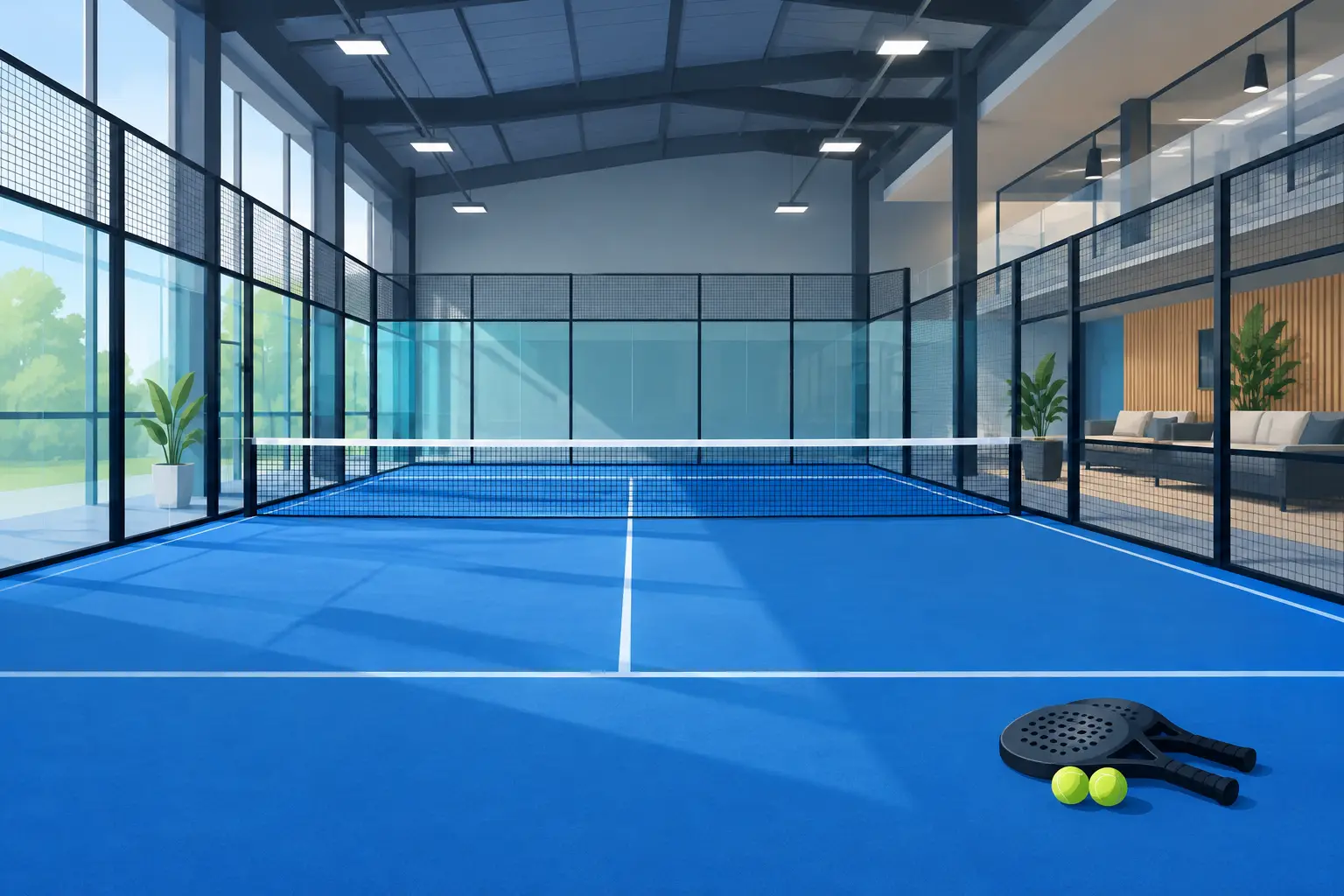
A packed court has a buzz all of its own: rallies flying, mates cheering and the café humming after a big point. But sometimes you want the other side of padel. If you’re wondering when are padel courts quiet, the short answer is usually weekday mornings, early afternoons and later evenings – with a few important exceptions.
The best quiet slot is not only about finding an empty court. It is about choosing the kind of session you want. A quieter booking can mean more room to settle in as a beginner, more focus during coaching, easier access to a private session, or simply a cleaner run at a competitive match without racing the clock around a busy social schedule.
When are padel courts quiet in Western Sydney?
At most indoor padel venues, demand follows the rhythm of work, school and social life. Peak times tend to build after business hours and across weekends, when friendship groups, leagues and social players are ready to play. Quiet periods are more likely while people are at work, studying or handling the day-to-day rush.
Weekday mornings: the calmest window
Weekday mornings are often the strongest option for players who want space and a more relaxed venue feel. From opening through to late morning, courts can be ideal for one-on-one coaching, a technical hit, a doubles session with flexible timing, or a first game with mates who are still learning the rules.
This window suits shift workers, parents with daytime availability, remote workers taking a proper break and players serious about improving. There is no need to make every session a full-blown event. Book a court, get your repetitions in, and head back into the day feeling like you have done something better than another screen break.
The trade-off is obvious: not everyone can play before lunch. If your group works standard hours, a morning booking may take some planning. For those who can make it happen, though, it is often the most reliable path to a quieter court.
Early afternoons: a smart option for focused play
The period between lunch and the school-and-work finish can also be less busy. Early afternoon bookings are particularly useful for private coaching, junior development sessions, small corporate groups with flexible schedules and players who want to practise specific shots rather than squeeze in a social match.
Padel rewards repetition. The bandeja that keeps dropping short, the return that sits up too high, the volley you rush under pressure – these are easier to work on when your session has breathing room. A training-size private court can make that focus even sharper, especially for pairs who prefer privacy or players looking for a hijab-friendly environment.
Afternoon demand can change during school holidays, wet weather or special events, so treat it as a strong likelihood rather than a guaranteed empty venue. Checking live availability before you lock in a plan is always the smarter play.
Later evenings: quieter after the rush
Weeknight prime time is usually busy for good reason. People finish work, message the group chat and look for something fun, fast and furious to do together. If you can play later, however, the period after the main evening rush may open up again.
Late sessions work brilliantly for committed players, hospitality workers, night owls and groups that do not need to be home early. The pace can feel more relaxed, but the quality does not drop. In fact, a later booking is a great time to play longer points, test tactics and stay for a post-match drink without needing to bolt out the door.
Indoor courts make this option especially attractive. There is no fading light, no wind changing the ball and no rain turning the plan into a group-chat debate.
Times that are usually busiest
If a quieter experience is your priority, be cautious around weekday evenings, especially roughly from 5 pm to 9 pm. This is when after-work doubles, organised training, leagues and social sessions naturally gather momentum.
Weekends can be equally lively, particularly mid-morning through the afternoon. They are brilliant for the full padel experience: teams arriving together, spectators watching, juniors developing their game and players settling into the lounge after a match. They are less predictable if your goal is silence and plenty of open availability.
That does not mean you should avoid peak times. For a new player, a busy social session can be the fastest way to meet people and find regular hitting partners. For competitive players, it is where the energy rises and the best matches often happen. Quiet is valuable, but so is community. Pick the atmosphere that fits the session.
How to find a quiet court without guessing
Court demand changes from week to week. A public holiday, school holidays, a major sporting fixture, a rainy afternoon or a popular programme can all shift the usual pattern. Rather than relying only on a rule of thumb, use the booking calendar to compare several days and times.
Look beyond the next available court. If you have flexibility, scan the same time across a few weekdays, then check earlier or later slots on the day you want. You may spot a pattern quickly. A 10 am Tuesday session might suit your crew every week, while a Thursday at 8.30 pm could become your go-to competitive hit.
It also helps to decide what “quiet” means for you. Some players want an empty court beside them because they are working with a coach. Others simply want an easier booking time, while still enjoying the venue atmosphere. If you want privacy, ask about booking the dedicated private court rather than trying to predict general court traffic.
Make quieter sessions count
A less crowded booking is an opportunity, not just a convenient timeslot. Turn up a few minutes early, warm up properly and give your session a purpose. For beginners, that could mean learning serve position, wall use and scoring without feeling rushed. For regular players, choose one tactical goal: better lobs, quicker net transitions, more patient point construction or stronger communication with your partner.
Quieter times are also excellent for introducing someone new to padel. The sport is social from the first point, but a first-timer can feel more comfortable when there is time to ask questions, borrow a racket and find their rhythm. There is no need to arrive as an expert. The best doubles partnerships usually start with plenty of laughs, a few wild rebounds and the realisation that the glass is about to become your favourite teammate.
At The Padel Lounge, indoor courts, supplied rackets and balls, high ceilings, scoreboards and lounge spaces make it easy to shape the session around your group. You can train with intent, play a sharp set, then stay long enough to talk through the points that got away.
Quiet courts versus social sessions: choose both
The strongest padel routine often includes a mix. Use quieter morning or afternoon slots to hone technique, test new patterns and enjoy a more focused hit. Then jump into a social night, Americano or league fixture when you want fresh opponents, match pressure and the full community buzz.
This balance matters because padel is not only about hitting the ball well. It is about reading your partner, adapting under pressure and building the confidence to play anyone. A quiet court gives you time to improve the details. A busier session gives those details a real test.
If your ideal booking is calm, start with a weekday morning, early afternoon or later-evening session and check the calendar before you commit. Bring your crew, give yourselves a simple challenge and enjoy the extra court time. The quietest slot might just become the one where your game gets loud.