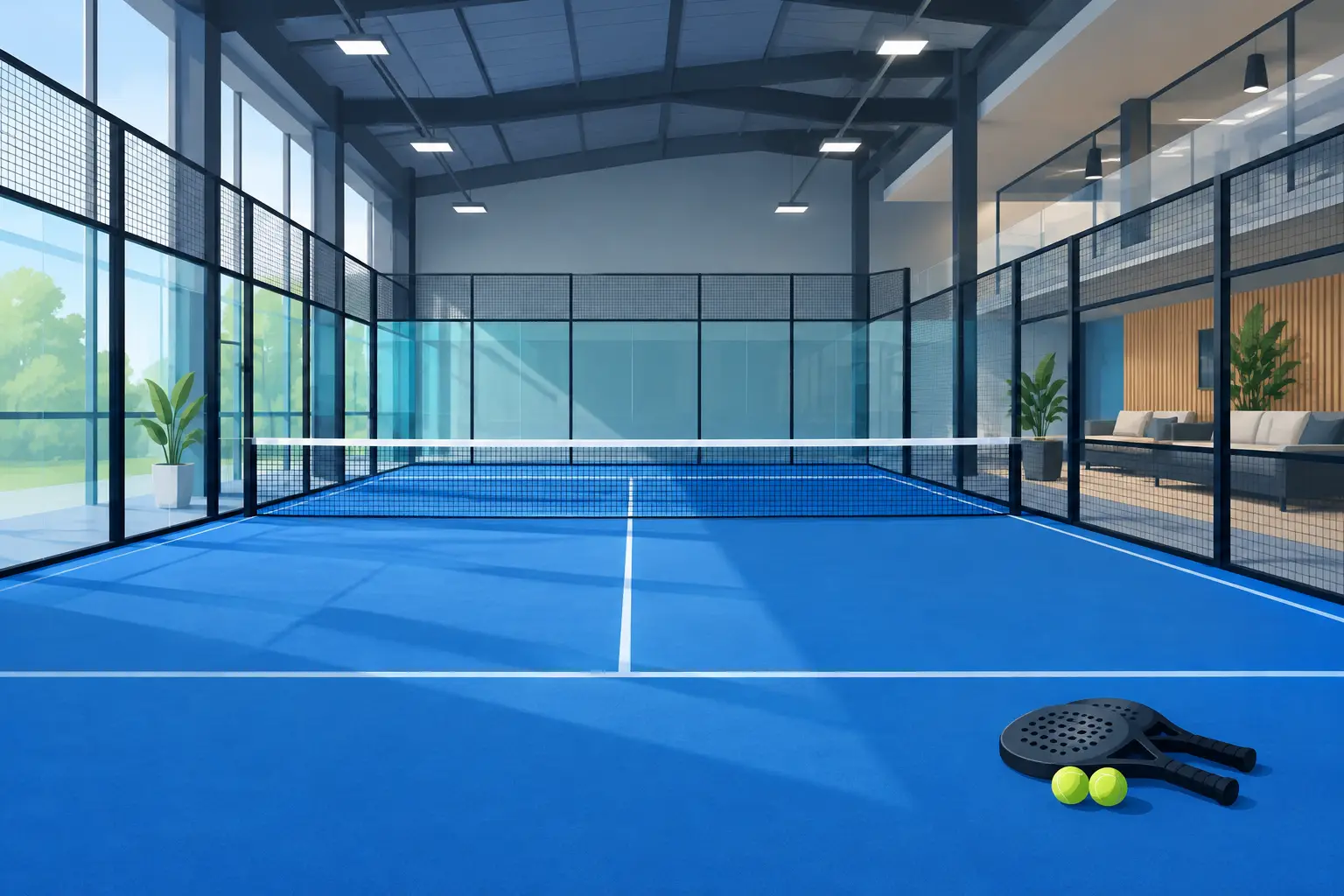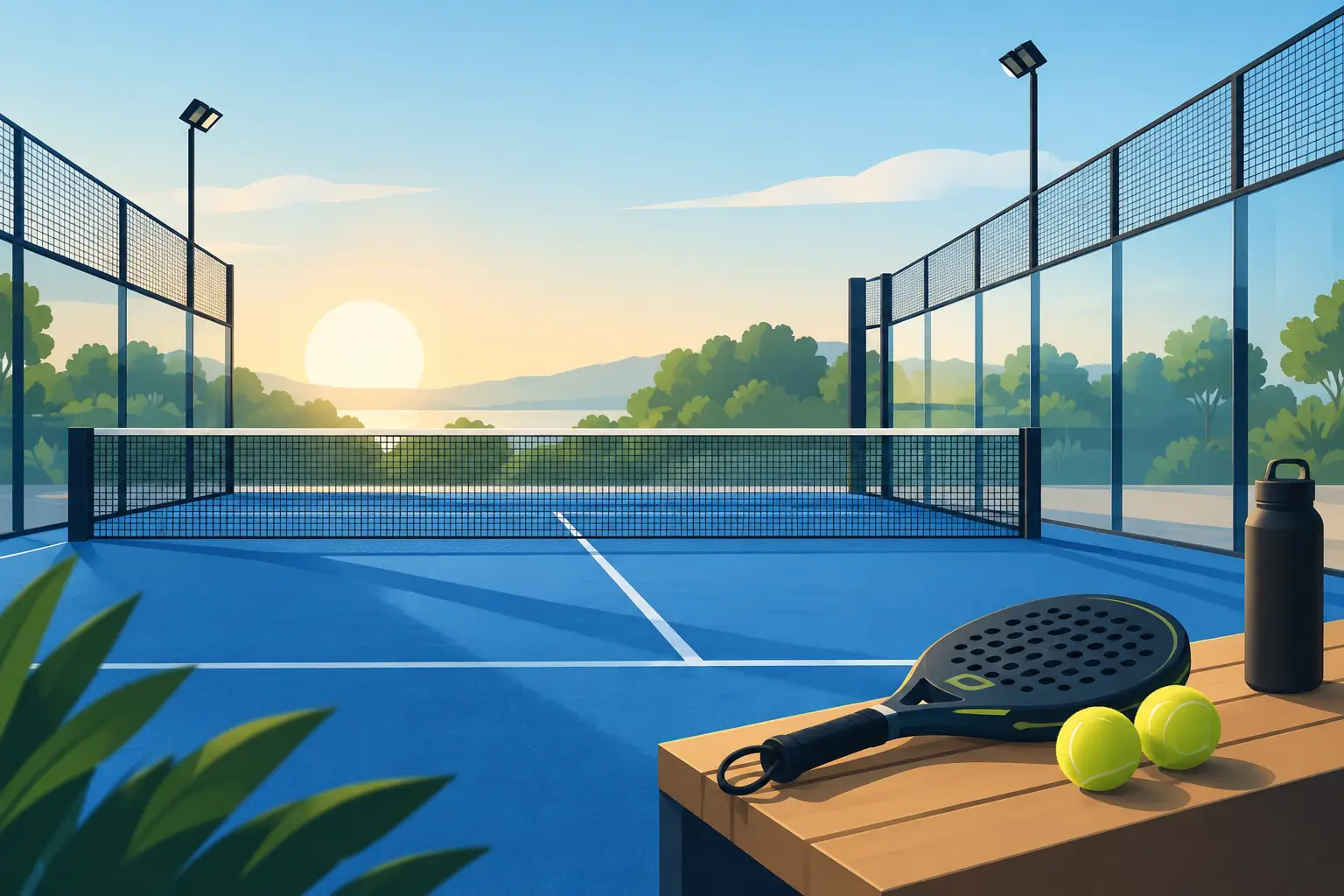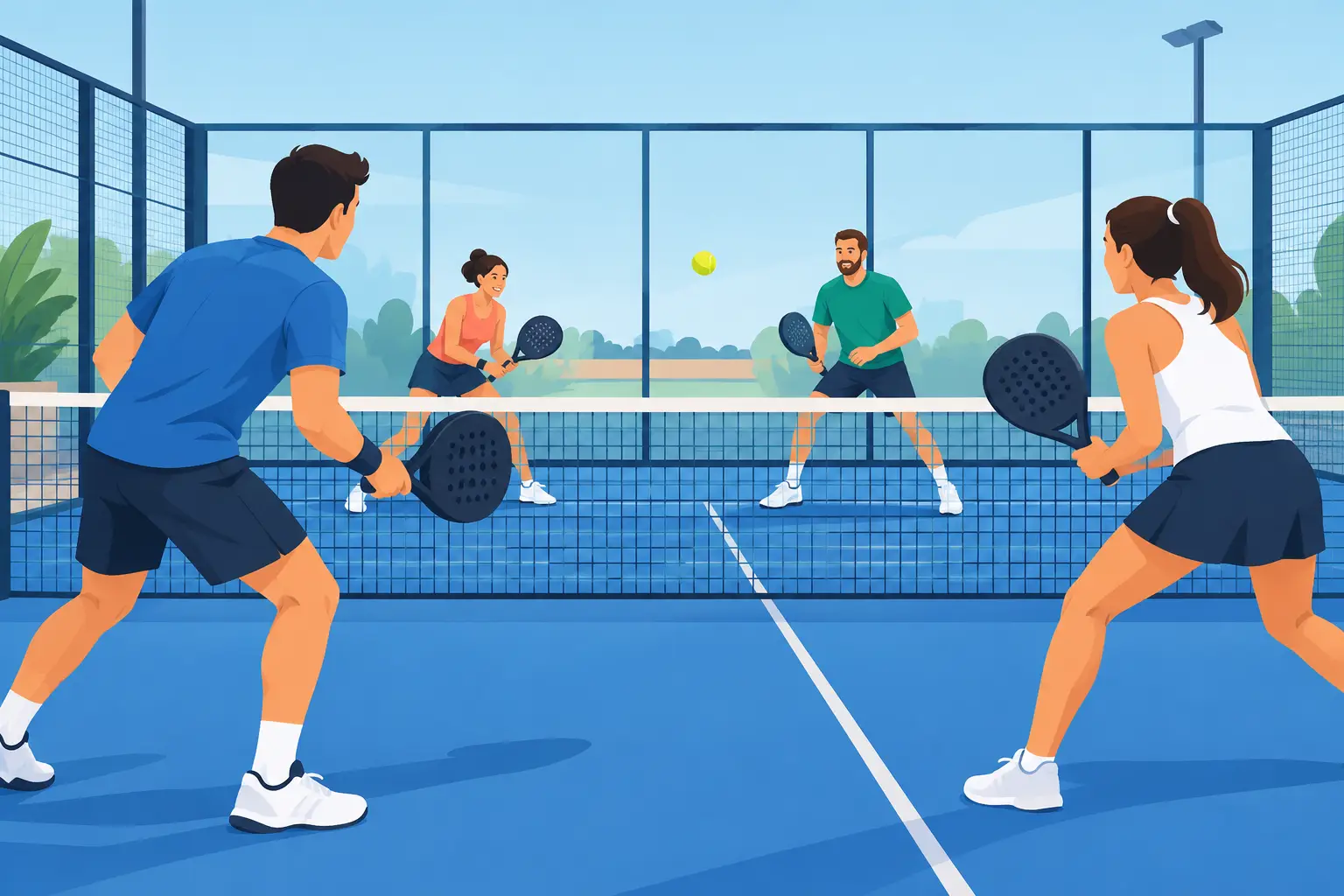
Your first padel match guide begins with one reassuring truth: you do not need a perfect forehand, a tennis background or a highlight-reel smash to have a great time. Padel is fun, fast, furious and brilliantly social from the first rally. Get the ball in, communicate with your partner and let the glass become part of the game.
The first few points can feel busy. There are four players, compact courts, rebounds off the walls and plenty of quick decisions. But the basics settle in faster than most people expect. Focus on keeping the ball low, giving yourself room to react and enjoying every rally that lasts longer than three shots.
Before your first padel match
Turn up in comfortable activewear and court shoes with good grip. Running shoes can work for a casual first hit, but their higher, softer soles are less stable when you need to change direction. Avoid shoes with heavy tread that can catch on the court surface.
Bring water and be ready to move, but leave the pressure at the door. A padel racket is solid rather than strung like a tennis racket, shorter in length and easier to control close to the body. Hold it with a relaxed continental grip, much like holding a hammer. If that means nothing to you, start by holding the handle so the face sits naturally upright in front of you. Do not squeeze it too tightly. Tension makes every shot harder.
For a first session, it also helps to agree on the format before you play. A full set is great if everyone knows the scoring, while a timed match or first-to-four games keeps things moving for a social group. At The Padel Lounge, professionally supplied rackets and balls remove the biggest first-timer barrier: you can arrive ready to play, not ready to shop.
How scoring works in padel
Padel generally uses traditional tennis scoring: 15, 30, 40, game. Six games wins a set, usually with a two-game margin. At 40-all, some groups play advantage scoring, where one side must win two points in a row. Others use golden point, where the next point decides the game. Ask before the first serve so nobody is debating the score halfway through a rally.
The server starts on the right side of the court and serves diagonally into the opponent’s service box. After each point, the server alternates sides. If your team wins the game, the same player continues serving for that game. The serve rotates between all four players as games progress.
Say the score out loud before serving. It is a small habit that prevents confusion and gives everyone a second to reset. In a social match, honesty matters more than perfection. If nobody saw whether a ball clipped the glass or line, replay the point and get on with it.
The serve: keep it simple and legal
A padel serve is underhand. Stand behind the service line, let the ball bounce once, then strike it at or below waist height towards the diagonal service box. You get two serves, just as in tennis.
Your first goal is not to hit an ace. Aim for a controlled serve with enough margin that it lands comfortably in the box. A serve that bounces in the correct box and then touches the back glass is still live. If it bounces and hits the wire fence before your opponent can return it, it is out.
After serving, move forward with your partner. The net is usually the strongest attacking position in padel, but do not sprint there blindly. A deep return may force you back, and a high defensive lob can put your opponents in control. Think of position as a constant conversation rather than a spot you claim and never leave.
The wall is your friend, after the bounce
The glass is the part that surprises most newcomers. The key rule is simple: on your side of the court, the ball may rebound from the glass after it has bounced on the ground. You can then play it back before it bounces a second time.
That means you do not have to rush every ball at the back of the court. Often, the smartest move is to let a deep ball reach the glass, wait for it to rebound and play it with more space in front of you. Give yourself a step or two behind the bounce when possible. Standing too close to the back glass leaves you jammed and guessing.
On your shot, the ball must land in your opponents’ court first. It can then rebound off their glass and remain in play. A ball that goes straight into the glass on the other side without touching the court is out. The same principle applies to the fence: use it as a boundary, not a target.
Do not worry about trying fancy wall shots in your opening match. A calm return down the middle or a high lob is a much better choice than swinging wildly at a ball beside the glass.
The first-match tactics that actually work
Padel rewards patience. Big swings feel tempting, especially when the ball sits up, but the court is small and your opponents are close. A controlled shot that stays low or pushes them back is often more valuable than a winner attempt that smashes into the fence.
Play through the middle
When you are unsure where to hit, send the ball between your opponents. The middle creates hesitation: both players may think the other person has it. It also gives you a bigger target than trying to paint the side wall. Keep the ball low where you can, particularly when your opponents are at the net.
Use the lob early
The lob is one of padel’s best reset buttons. If the other pair are crowding the net, lift the ball high and deep over them. This buys you time to move forward, shifts them towards the back glass and can turn defence into attack. A lob that lands short is an invitation for a put-away, so give it height and aim well beyond the service line.
Move with your partner
The quickest way to create a gap is to move separately. When one player heads to the net and the other stays deep, the space between you becomes easy to attack. Try to move up together after a good ball and retreat together when you are under pressure.
Call simple words early: mine, yours, leave, switch. There is no need for a full tactical meeting between points. Clear communication makes the court feel larger, and it makes a first match far more enjoyable.
Choose consistency over power
Your first win might come from one more ball in the court, not one spectacular shot. Aim for comfortable rally height, use compact swings and watch the ball right onto the racket. If you can make your opponents hit an extra shot, you are playing smart padel.
Court etiquette that makes everyone want a rematch
Padel has a welcoming culture, and good etiquette keeps it that way. Collect balls between points, return them safely under the net or with a gentle roll, and avoid walking behind a court while a point is live. If a ball from another court enters yours, call let and replay the point once everyone is ready.
Respect the server’s rhythm. Avoid talking or moving unnecessarily as someone prepares to serve. If you are unsure about a rule, ask without making it a big deal. New players learn fastest in a match where both sides are generous with explanations and serious about the next point.
Acknowledge great shots from either team. Padel is competitive, but it is also built for connection. The best sessions usually continue after the last point, whether that means comparing rallies from the spectator seats or grabbing something at the café.
What to focus on after the first few games
Do not try to fix everything at once. Pick one intention for the rest of the match. It could be getting more returns in play, calling every ball, using a lob when under pressure or waiting for the back glass instead of panicking. One clear focus creates real progress.
If you are playing with more experienced friends, ask them to tell you one thing only between games. Too much advice can turn a fun first match into a lesson you did not sign up for. The right tip, delivered at the right moment, is enough to change your next rally.
Expect a few mishits, awkward wall bounces and moments where all four players watch the ball land. That is part of the appeal. Keep showing up, book another session and let the game reveal itself point by point. Your first padel match is not a test of whether you belong on court. It is the start of finding your rhythm there.