The first time the ball rockets off the glass, your partner calls yours, and two opponents are waiting at the net, padel can feel very fast. The good news: you do not need a perfect backhand or a highlight-reel smash to gain padel confidence. You need a few reliable decisions you can make again and again when the pace lifts.
Confidence in padel is not pretending you will never miss. It is trusting that you know what to do after a miss, where to stand for the next ball, and how to keep contributing to your team. That is a much more useful kind of confidence – and it is built point by point.
Start with a role, not a bag of tricks
Newer players often lose confidence because they try to hit every ball like the strongest player on court. They rush winners, take balls too early and chase shots that belong to their partner. The result is usually more errors, more hesitation and less fun.
Give yourself a simpler job. When you are defending, make one more ball. When you are attacking, keep the ball low and make your opponents play up. When your partner hits a good lob, move forward together. These are not flashy instructions, but they win a remarkable number of points.
Padel rewards patience because the walls keep rallies alive. A controlled ball through the middle, or a deep lob that buys your team time, can be far more valuable than trying to blast a winner from behind the service line. Once you see that a calm shot can change the point, pressure starts to feel less personal.
Use high-percentage targets
If you are unsure where to hit, choose the middle. It reduces the angles available to your opponents and can create confusion over whose ball it is. If both players are tight at the net, send a lob over the player with the weaker overhead or into the deeper corner.
Your target will depend on the players, the score and your own strengths. Still, having a default option matters. Confidence drops when every ball feels like a brand-new puzzle. It rises when you have a sensible answer ready.
Gain padel confidence by owning your court position
A huge part of looking and feeling composed is simply being in the right place before the ball arrives. Padel is a game of pairs. Move as a pair, defend as a pair and take the net as a pair.
At the net, stay roughly an arm and racket length from it rather than pressing your nose against the mesh. That gives you room to handle a fast ball at your feet while still cutting off volleys. Keep your racket up in front of your body, with soft hands and bent knees. You are ready to block, volley or let a higher ball pass safely.
When defending near the back glass, resist the urge to stand glued to it. Start a little forward, read the bounce and move back when needed. Letting the ball travel can feel scary at first, particularly if you come from tennis, but the back wall is a teammate once you learn its timing.
The key is communication. Call “mine”, “yours”, “switch” and “leave” early and clearly. A basic call made with conviction is better than a late apology. Even if you choose the wrong ball now and then, decisive communication gives your pair a chance to organise.
Make practice feel like the match
Confidence built only in easy feeding drills can disappear as soon as a scoreboard goes up. Technical repetition has its place, especially when learning a new volley, lob or wall return. But make sure some of your practice includes the awkward parts: an uneven score, a ball at your feet, a rushed second serve, or a partner who plays differently to you.
Try starting mini-games at 30-30 or deuce. Play points where the defending team can only score after winning the net. Set a target of three successful lobs before you attempt an attacking shot. These constraints train your decision-making, not just your stroke.
A focused session on a smaller training court can also speed up learning. With less space to hide, you get more touches, sharper reactions and clearer feedback on your positioning. Then take that feeling onto a full-size court and give yourself permission to play the simple ball first.
At The Padel Lounge, a mix of social play, group training and competitive formats gives players a useful progression: learn the patterns, test them with new people, then use them when the points matter. You do not have to jump straight into the toughest match on the calendar to improve.
Create a reset routine between points
Even excellent players make errors. The difference is that they do not carry one mistake into the next four points.
Build a reset that takes five seconds. Turn away from the court, take one slow breath, adjust your grip or tap the side glass, then face forward with one clear intention. It might be “lob first”, “watch the ball” or “move with my partner”. Keep it short enough that you will actually use it.
Avoid replaying the error in your head. Ask one practical question instead: was it the wrong shot, poor contact, or late positioning? If you know, make the adjustment. If you do not know, simplify the next point and get yourself back into the rally.
Your body language matters too. Slumped shoulders and a tossed racket tell everyone, including you, that the point is already lost. Stand tall, make eye contact with your partner and offer a quick “next one”. This is not fake positivity. It is a signal that your pair is still connected.
Choose partners and matches that help you grow
Playing with stronger people can be brilliant for your padel, but only if the gap allows you to touch the ball, make decisions and learn from them. If every rally is over before you are involved, confidence will not get much room to develop.
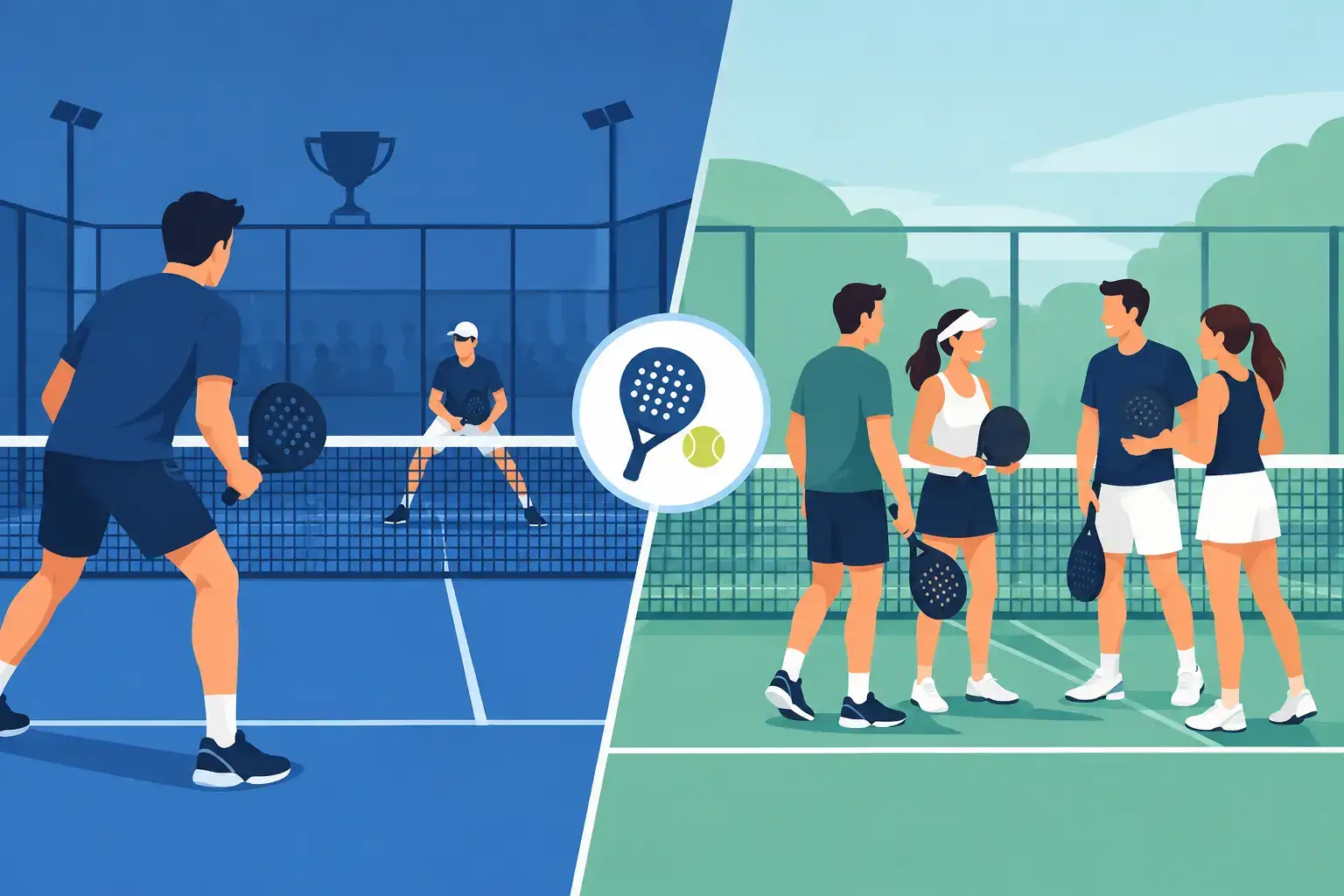
Mix it up. Play some social sessions with welcoming players, some balanced matches where every point is live, and some games against tougher opposition. Each environment gives you something different. Social play helps you relax. Even matches teach pressure management. Stronger opponents expose the next skill worth working on.
Be honest about the type of confidence you are chasing. If your goal is to feel comfortable with friends, you do not need an advanced vibora tomorrow. If you want to compete in leagues, you will need to get comfortable being uncomfortable – serving at deuce, defending hard overheads and staying patient through long rallies.
Track the wins that do not appear on the scoreboard
A loss can still be a strong session. Perhaps you returned more serves, called every middle ball early, used the glass with less panic, or stayed positive after an error. Those are real improvements, and they create results later.
After a match, give yourself one thing that worked and one focus for next time. Keep it specific. “My volleys were good” is vague. “I kept my backhand volley low through the middle” tells you what to repeat. “I need to improve” is also vague. “I will practise lobbing from the backhand corner” gives you a plan.
Do not turn every session into an assessment. Padel is fun, fast, furious and social for a reason. Have a laugh after the wild rally, enjoy the café catch-up, and remember that confidence grows faster in an environment where you feel you belong.
The next time the match gets tight, do not search for a miracle shot. Breathe, move with your partner, choose the smart target and make them play one more ball. That is how confidence starts to hold up when it counts.