A padel serve is not meant to blow past anyone. It is your first chance to take charge of the point. A low, controlled serve that pushes the returner wide or jams their body can set up the next ball at the net – and that is where plenty of matches are won.
If you want to improve padel serve, forget trying to hit it harder. Build a serve you can repeat when the score is tight, then add placement and variation. Fun, fast, furious padel starts with a first ball you trust.
Improve Padel Serve by Building a Reliable Base
The best serve for most recreational players is uncomplicated: a calm bounce, clean contact below waist height and a smooth swing that sends the ball low over the net. It should feel controlled rather than forced. If your serve is regularly finding the net, sailing long or arriving chest-high for the returner, the answer is usually not more effort.
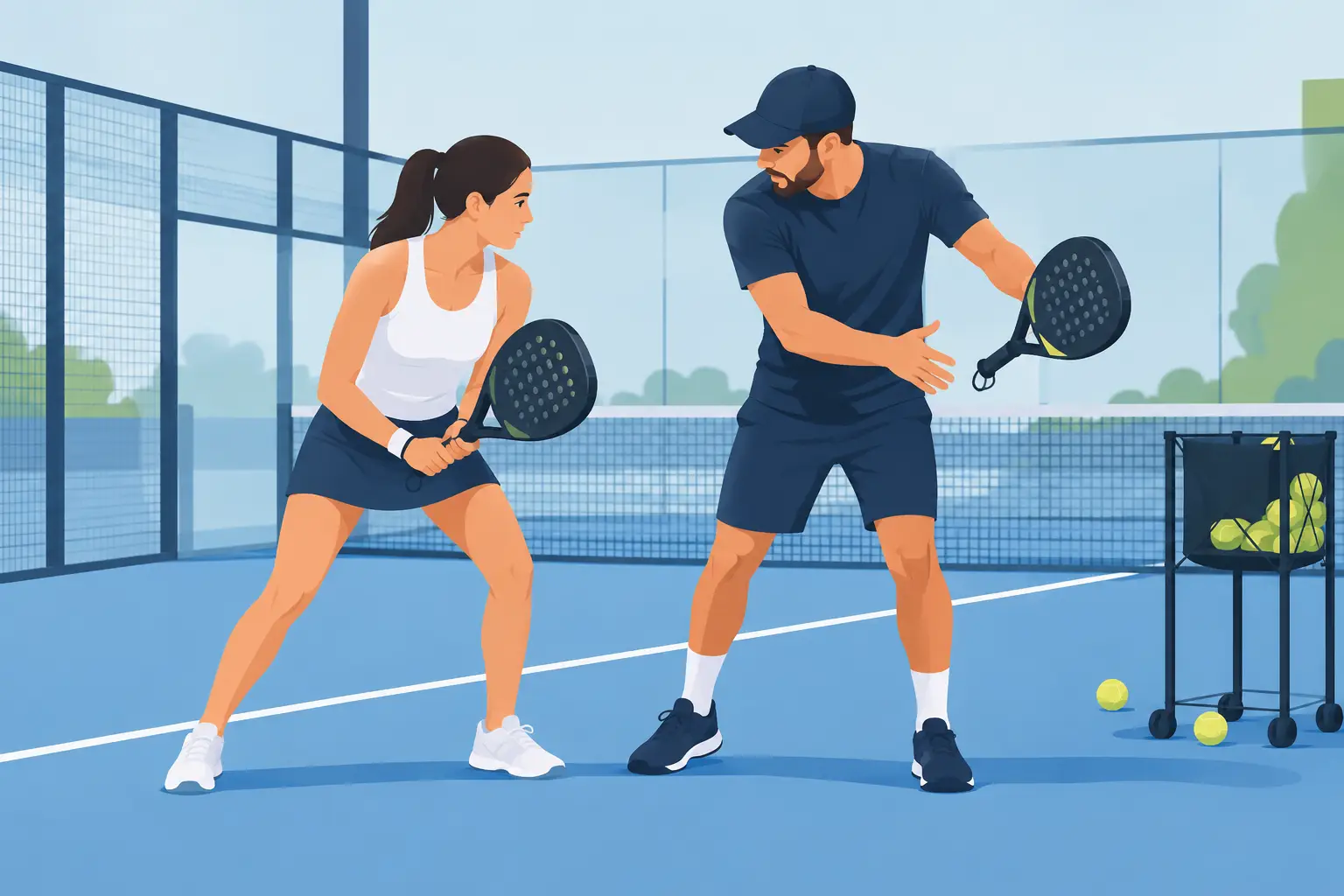
Start with your stance. Stand side-on enough that you can rotate through the ball, with your front foot pointing generally towards the service box. Keep your balance centred and leave room to swing freely. You do not need a huge backswing. In fact, a compact preparation makes timing far easier and gives you fewer moving parts under pressure.
Use a continental or neutral grip if possible. It gives you the flexibility to hit a flatter serve, cut underneath the ball or add sidespin without telegraphing your intention too early. Players coming from tennis often hold the racket too tightly and try to snap at the ball. Soften your hand. A relaxed grip helps the racket face stay stable through contact.
The bounce matters more than players think. Bounce the ball consistently in front and slightly to the side of your body, then let it rise to a comfortable contact point below your waist. Avoid tossing or chasing the ball. A rushed or wandering bounce turns a simple underarm action into a scramble.
Aim to clear the net with a safe margin, not by metres. Your target is a serve that drops into the box and stays low after the bounce. Think of brushing forward through the ball rather than lifting it. Your follow-through can finish towards your intended target, with your weight moving naturally forward.
Give yourself time after contact
One common mistake is admiring the serve. The moment you strike it, move forward with purpose. You want to claim an attacking position near the net before the return comes back. Sprinting blindly is not the goal, especially against a quick returner, but standing on the baseline after serving gives away the advantage.
Serve, take a few decisive steps forward, split-step as your opponent hits, then prepare for the next ball. That sequence should become automatic. Your serve is only the first half of a serving pattern.
Place the Serve Before You Add Pace
Accuracy changes points. Pace only helps once you can put the ball where you want it.
Start by owning two targets: wide and into the body. A wide serve can pull the returner towards the side glass and open space through the middle. A body serve takes away their extension, often producing a shorter or less confident return. Both can be effective from either side, but the best option depends on the returner’s position, grip and comfort level.
The serve down the T is useful too, particularly when an opponent is leaning early towards the outside ball. It travels through a narrower channel, so give it slightly more height and margin until you have practised it. The goal is not to paint lines. A ball landing well inside the box with purpose is better than a low-percentage attempt that gifts away a free point.
Watch what happens after the return, not just whether the serve lands in. If your wide serve consistently brings back a floating ball through the middle, it is doing its job. If a fast flat serve keeps coming back hard at your feet, slow it down and make the target more awkward.
Padel rewards patterns, but not predictable ones. Serve wide twice, then go into the body. Use the same set-up for each serve so your opponent cannot read the direction from your shoulders. Small variations make returners hesitate, and hesitation is valuable.
Add Spin That Has a Purpose
Slice is the most useful serve variation for many players. A slight cut can keep the ball lower, make it move away from the returner and create an uncomfortable bounce near the glass. But too much slice often sends the ball wide, shallow or into the net. Start with a controlled serve and add only enough racket path across the ball to change its behaviour.
A flatter serve can work when you want to target the body or move the ball quickly through the court. It is generally simpler to control, particularly for newer players. Heavy sidespin can be effective, but it is a later addition, not a shortcut. If you cannot land it under score pressure, it belongs on the practice court for now.
The right choice depends on who is returning. Against someone who struggles near the side glass, a low sliced serve wide is worth repeating. Against a player who likes taking the ball early, use a deeper serve into their hip and get into position quickly. Strong serving is problem-solving, not showing off.
The Three Errors That Cost Easy Service Games
The first is trying to win the point outright. Padel serves are underarm for a reason. The returner usually has time to reach the ball, so focus on earning a weaker next shot rather than chasing an ace.
The second is serving too close to the service line. A short ball sits up, gives the returner angles and leaves you defending immediately. Hit through the box with enough depth that they need to move back or make contact from an awkward spot.
The third is changing your rhythm when the score gets tight. A player who bounces once in practice may bounce five times at deuce, rush the swing and miss. Keep your pre-serve routine short and repeatable: choose the target, settle your feet, bounce, hit, move. That is enough.
A 15-Minute Serve Session That Transfers to Matches
Do not spend an entire session hitting serves without feedback. Give each block a target and a reason.
Begin with five minutes of gentle first serves to the middle of each service box. Focus only on bounce position, clean contact and net clearance. Do not worry about speed.
For the next five minutes, alternate wide and body serves from both sides. Place a ball tube, cone or visual marker in the general target area if your court set-up allows it. Keep score: out of 20 serves, how many land in the intended zone? Tracking makes progress real.
Finish with five minutes of serve-plus-one play. Serve to a chosen target, move forward, then have a partner return the ball. Your job is to play the first volley with control, preferably towards the middle or at the deeper player. This is where a good serve becomes a useful point pattern.
If you are practising alone, use the training time to rehearse the serving action and movement after contact. At The Padel Lounge, a private training-size court can be a smart space for focused repetition without the noise of a full match. Then take the pattern straight into social play, Americano or league competition.
Read the Returner Before You Serve
Before each point, take one second to notice their starting position. Are they standing close to the baseline, waiting deep, leaving the middle exposed or protecting their backhand? That scan gives you a clue, but it is not a guarantee. Stay alert after the serve and be ready to adjust.
Also look at your partner. In doubles, your serve influences their first volley as much as your own. Tell them if you are planning to serve wide so they can anticipate the likely return through the middle. Clear, quick communication makes the pair harder to break.
The serve is a quiet advantage, built ball by ball. Make it low, purposeful and repeatable, then give yourself the chance to own the next shot. Book time to practise with intent, bring a mate, and let every service game become a chance to take the net first.