You do not need a tennis background, a partner with years of racquet-sport experience or your own gear to get moving. Beginner padel coaching in Western Sydney is about getting on court, making clean contact early and learning why this fun, fast, furious sport has become the social hit of racquet sports.
Padel is easy to pick up because the court is compact, the racket is solid and the glass is part of the game. But easy to start does not mean there is nothing to learn. A good first coaching session gives you the habits that make padel more enjoyable from your very first rally: where to stand, when to move, how to use the walls and how to play with the person beside you rather than four separate players chasing a ball.
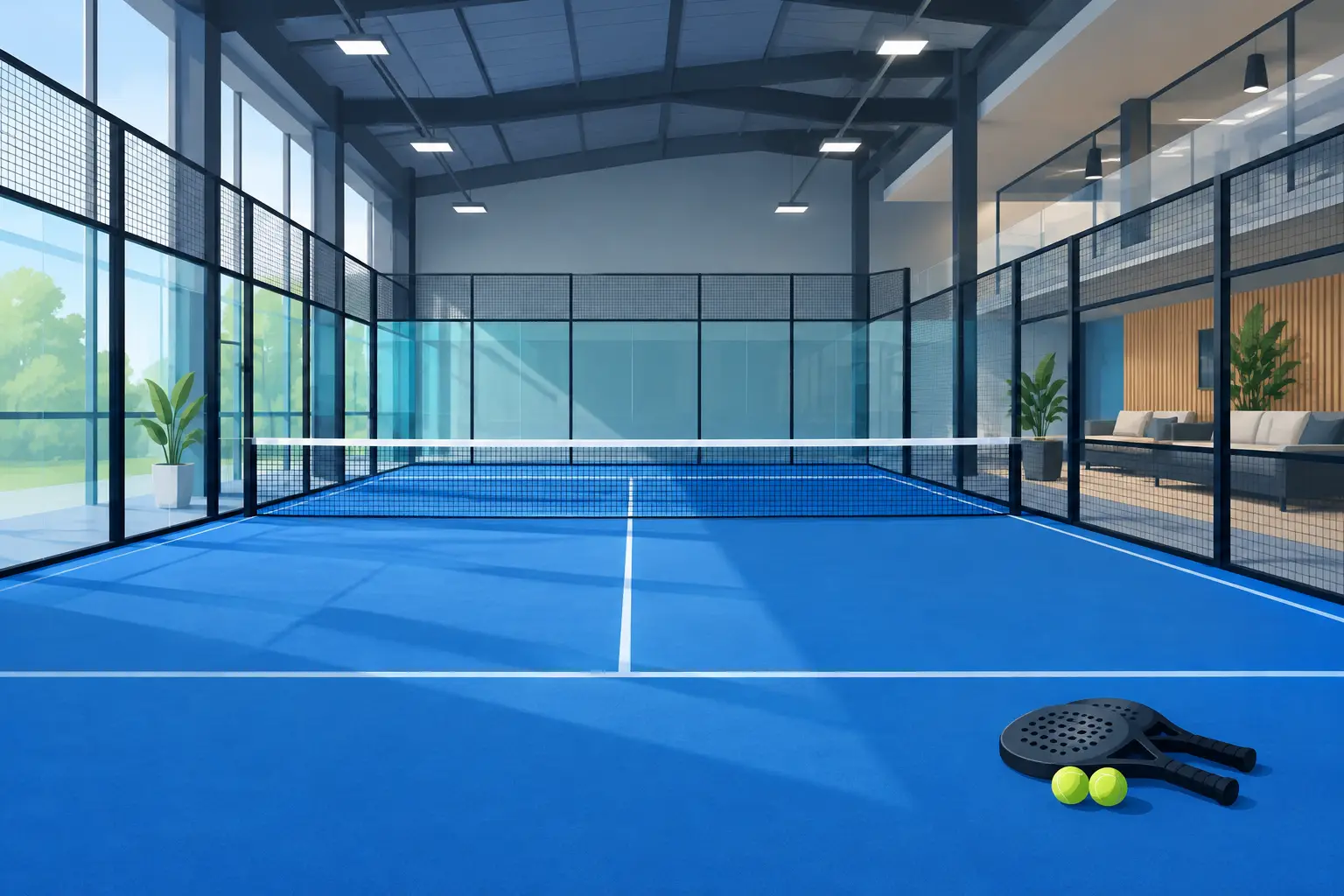
At The Padel Lounge in Greenacre, beginners can step into a polished indoor setting with professionally supplied rackets and balls, full-size internationally approved courts and room to settle in before the first point. Bring comfortable activewear and non-marking court shoes if you have them. We have everything else you need to get started.
What Beginner Padel Coaching in Western Sydney Should Feel Like
The right beginner session should feel active, clear and welcoming. You should spend more time hitting balls than standing in a queue, and leave knowing exactly what to try in your next social game.
Coaching starts with the fundamentals of grip, ready position and a controlled swing. Padel rewards compact technique. Huge tennis-style swings can make the ball fly long or leave you late for the next shot, while a short, balanced action gives you greater control. You will learn to meet the ball in front, stay light on your feet and recover to a useful position after every shot.
Then comes the point that makes padel different: the walls. New players often rush forward to hit a ball before it reaches the glass. In many cases, waiting is the smarter play. A coach helps you read the bounce, judge the space behind you and understand when the back wall turns a difficult ball into an easy return. It can feel unfamiliar for the first few rallies, then suddenly it clicks.
You will also learn the basic rules, including serving underhand, scoring and the no-volley zone near the net. There is no need to memorise every detail before arriving. The goal is to build enough confidence that you can join a social session or book a court without feeling like everyone else speaks a different sporting language.
The Skills That Make Your First Matches Better
Beginner coaching is not about trying to hit a winner on every ball. It is about building repeatable shots and better choices. When you can keep the ball in play, communicate with your teammate and recover your court position, the points become longer and far more entertaining.
Start with consistency, not power
The first big win is controlling the ball. Coaches will usually focus on a simple forehand and backhand, gentle volleys and a reliable serve before introducing harder attacking shots. A well-placed ball that stays low creates more pressure than a booming shot that hits the glass halfway up and comes straight back to your opponents.
It depends on your sporting background, of course. A confident tennis player may adapt quickly to the racket and ball, but still need to break the habit of covering the court alone. Someone completely new to racquet sports may take longer to time the ball, yet often learns padel positioning with a clean slate. Both players can improve quickly with the right repetition.
Learn to move as a pair
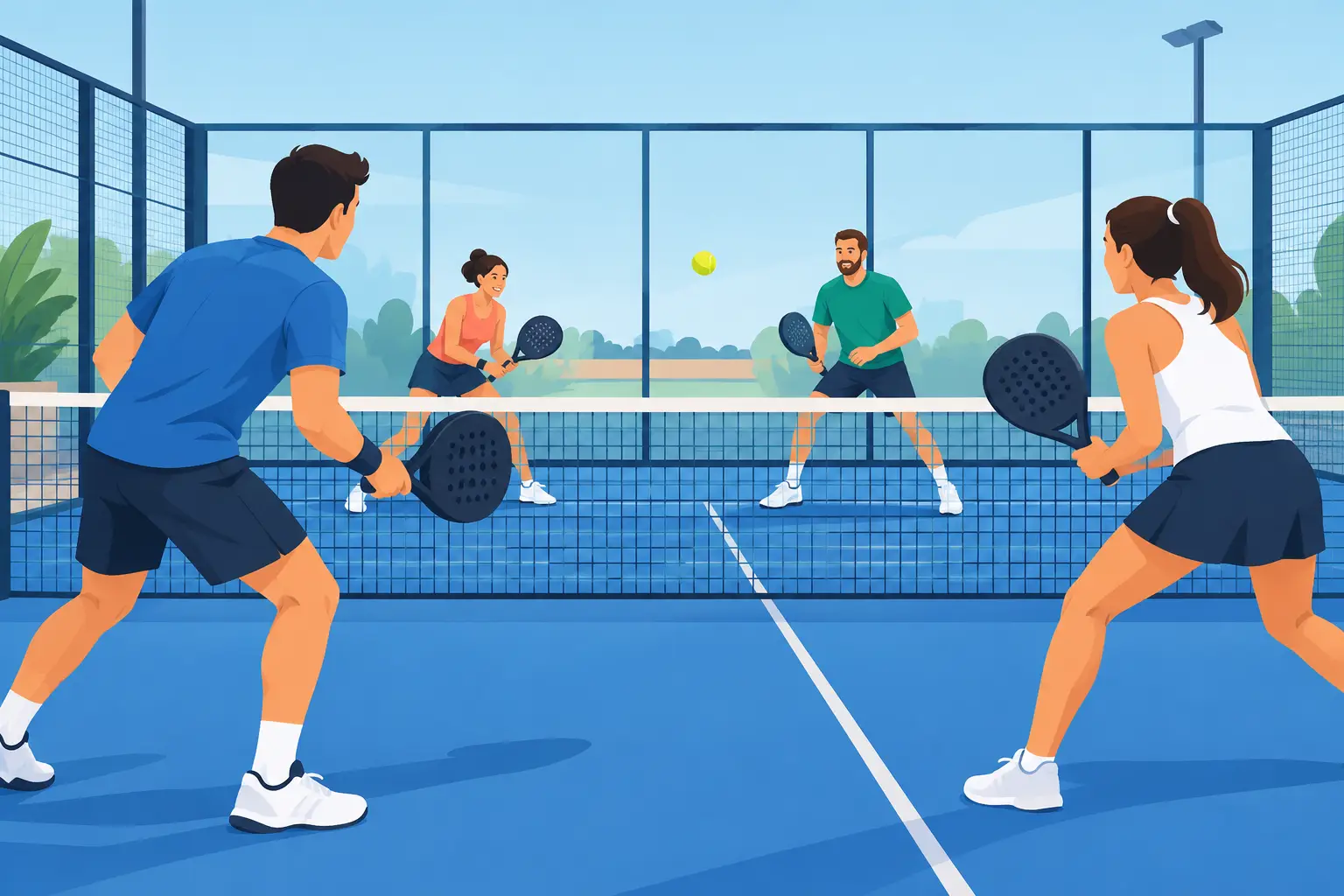
Padel is usually played in doubles, and that is where the social energy comes from. Your coach will show you why partners move up and back together, why leaving a giant gap down the middle causes trouble and how a quick call of “mine” prevents the awkward last-second swing.
The strongest beginner pairs are not necessarily the fastest or most powerful. They are the pairs that stay connected. When one player moves to the net, the other comes with them. When the ball pushes them back, they reset together. That simple habit makes the court feel smaller and gives both players more time.
Use the net with purpose
The net is where many padel points are won, but charging forward at the wrong time can be costly. Coaching teaches you to earn your way forward with a controlled shot, then hold a balanced volley position rather than leaning into every ball.
For beginners, the aim is often to volley into safe space and keep the ball low. You do not need a highlight-reel finish. Make your opponents play one more ball, stay ready for the reply and let the point build.
Make friends with the glass
The back wall is not an emergency option. It is a tactical tool. Learning to let a ball travel to the glass, turn side-on and play it after the rebound can change your entire experience of the sport.
There will be mishits. There will be moments when the ball takes a funny angle and everyone laughs. That is part of the learning curve. The important thing is getting comfortable enough to stay calm instead of panicking when the ball goes behind you.
From First Lesson to Your First Proper Game
One lesson can make padel feel possible. Regular play is what makes it feel natural. The best pathway mixes coached practice with low-pressure match time, because skills need a chance to show up when the score is on.
After an introductory session, try a social night, a beginner-friendly group training session or a casual game with three friends. Playing with a mix of people is useful too. You learn different ball speeds, different styles and the small habits that make doubles work. Program formats such as Padel Americano can be especially welcoming because you rotate partners and opponents rather than needing to arrive with a fixed four.
Give yourself a few sessions before judging your progress. Padel has those satisfying lightbulb moments: the first time you return a ball cleanly off the back glass, the first controlled volley, the first rally that seems to go on forever. Progress is rarely a straight line, but every court hour sharpens your touch and your decision-making.
If privacy is important, a training-size private court can also create a more comfortable place to learn. It suits focused technical sessions, families wanting their own space and players looking for a hijab-friendly environment. The court format matters less than feeling free to ask questions, make mistakes and hit plenty of balls.
Why Indoor Coaching Changes the Experience
Western Sydney weather can be relentless. Hot afternoons, wet evenings and wind can turn an outdoor racquet session into a short one. Indoor padel keeps the conditions consistent, so your time is spent working on technique rather than chasing a ball blown off line.
A quality venue also makes a difference to a first-timer. High ceilings give lobs the space they need. Clear court surroundings make it easier to track the ball. Scoreboards, spectator seating and lounge areas add to the match-day feel, while a café means the game does not have to end at the final point.
That social side is not an extra. It is one of padel’s strengths. You can train hard, watch the next court battle it out, grab a bite and start talking about the shot you nearly made. For active adults, families and friendship groups, that is a far better reason to keep coming back than a workout that finishes the second you walk out the door.
Come Ready to Play, Not Ready to Be Perfect
The best preparation for beginner coaching is a simple one: arrive curious, wear clothes you can move in and be willing to have a laugh at the messy rallies. Ask the coach what to focus on between sessions. For most new players, it will be one or two things, not ten – perhaps keeping the racket up, waiting for the glass or moving with your partner.
Padel rewards people who keep showing up. Your first clean rally may feel small, but it is the start of a game that can become your weekly competition, your after-work catch-up or your child’s new sport. Get on court, take the first ball, and let the next one be better.