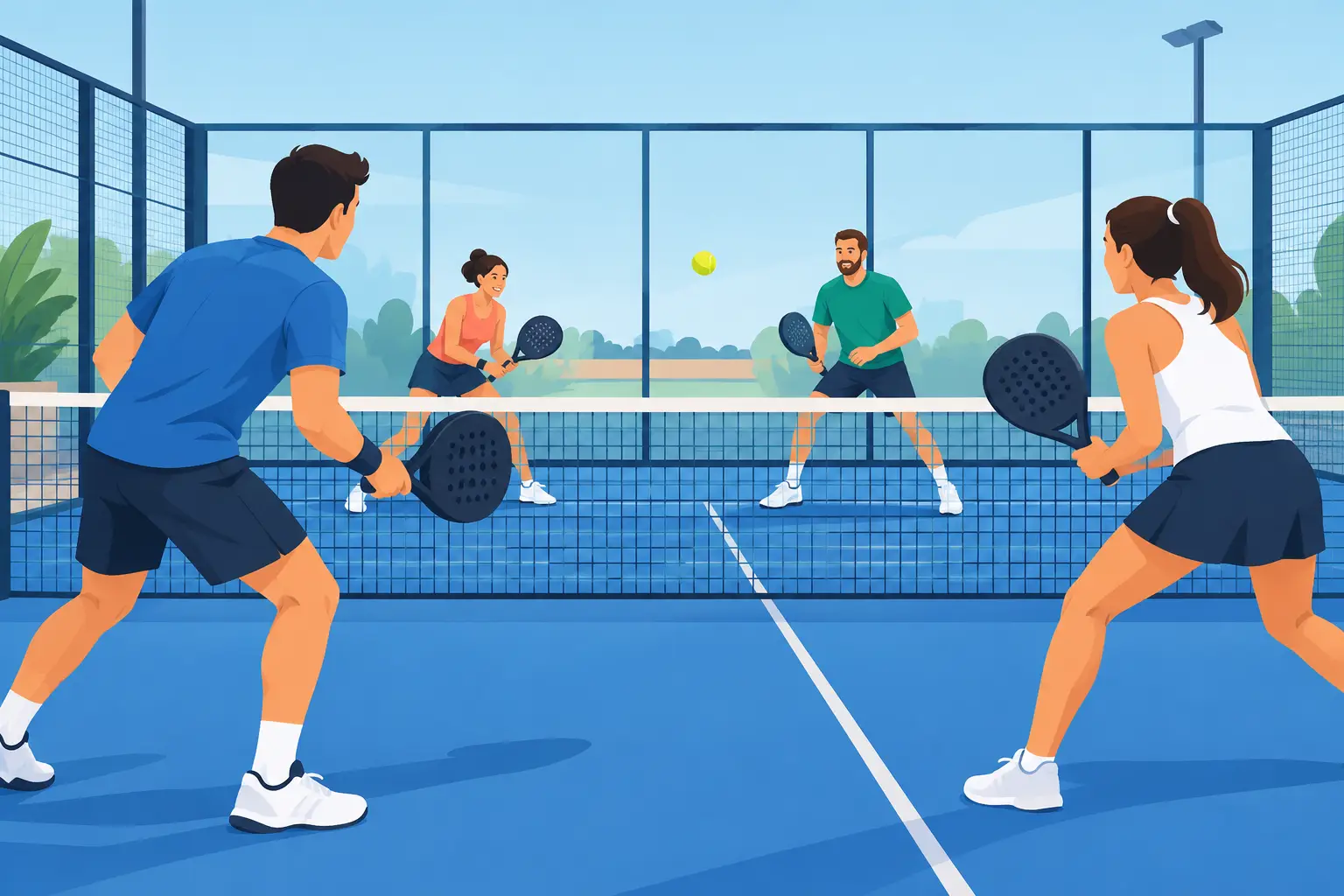
The best workout is rarely the one that feels like a chore. Padel fitness benefits come from chasing the next ball, reading a rebound off the glass and celebrating a sharp point with your playing partner. You are moving with purpose, thinking on your feet and having enough fun that an hour on court can disappear fast.
For active adults, families and competitive recreational players across Western Sydney, that matters. Padel brings the intensity of a proper session without asking you to stare at a gym wall or run laps alone. It is fun, fast, furious when the rally heats up, and accessible enough for first-timers to get involved from their very first hit.
Padel Fitness Benefits Go Beyond Cardio
A lively padel match gives your heart and lungs plenty to do. Short sprints to the net, quick recoveries towards the back glass, repeated changes of direction and long rallies raise your heart rate in intervals. It is not steady-state jogging. It is a stop-start game where your effort rises sharply, settles briefly, then rises again.
That pattern can improve cardiovascular fitness over time, particularly when you play consistently. The key word is consistently. A single hard session will leave you puffing, but two or three court sessions across a week can make a meaningful difference to your match fitness and day-to-day energy.
Padel also asks for full-body movement. Your legs create the base for every split step, lunge and push-off. Your core helps you rotate through forehands and backhands while keeping you balanced near the glass. Your shoulders, arms and grip work through repeated strokes, volleys, bandejas and overheads.
It is not a replacement for every kind of training. If your goal is maximum strength, you will still benefit from resistance work. If you are training for a marathon, longer running sessions have their place. But padel gives you a highly practical blend of cardio, lower-body work, coordination and upper-body endurance in one social hit.
Agility, Balance and Better Movement
The court is compact, but it is never still. One ball draws you forward for a volley; the next sends you back to defend off the glass. You shuffle sideways, plant, rotate, accelerate and recover. Those repeated movements develop agility in a way that feels natural because your attention is on the point, not on counting drills.
Balance is just as important. Good padel players learn to stay low, keep their weight centred and recover after every shot. Beginners start building this quickly too. Even before technique becomes polished, your body is learning where to place your feet and how to react to a ball that changes direction after hitting the wall.
This is one reason padel is such a smart option for people who want to feel more athletic without signing up to an intimidating training plan. You do not need to arrive as a racquet-sport expert. Start at your pace, focus on clean movement and let the game challenge you rally by rally.
For juniors, these movement skills can be especially valuable. Padel asks young players to track, judge, react and make decisions under light pressure. For adults returning to sport after a break, it offers a motivating way to rebuild confidence in movement. The right starting point depends on your fitness history, technique and any existing injuries, so there is no prize for trying to play at maximum speed on day one.
A Workout for Your Brain Too
Padel rewards more than effort. It rewards awareness. You need to spot space, communicate with your partner, anticipate an opponent’s next shot and decide whether to attack or reset the rally. That mix keeps your mind engaged from first serve to final point.
The tactical layer is part of what makes padel easier to stick with than a repetitive workout. Every match feels different. A clever lob can change the momentum. A patient defensive point can be more satisfying than a winner. You are building fitness while improving your decision-making, concentration and ability to stay composed when the score gets tight.
Playing doubles adds another dimension. You are constantly learning how to move as a pair: who takes the middle ball, when to come forward, when to cover behind your partner and how to reset after a mistake. That communication turns exercise into a shared challenge rather than a solo task.
The Social Factor Is a Real Fitness Advantage
Motivation is often the hardest part of getting active. A court booking with mates, a social night or a regular Americano session gives your week a built-in reason to show up. You are not only committing to a workout. You are catching up, competing, laughing at the messy points and staying for a drink or bite afterwards.
That social pull matters because fitness only delivers when it becomes a habit. People are more likely to keep moving when they genuinely enjoy the environment and feel part of the action. Padel welcomes that feeling. You can be brand new, borrow a racket, learn the basics and still share a rally within minutes.
For more experienced players, the community creates a different kind of drive. Structured training, league play and competitive match-ups provide clear reasons to sharpen your fitness. Better footwork helps you reach more balls. Greater endurance helps you stay switched on late in a match. Stronger habits off court show up when the pressure rises on court.
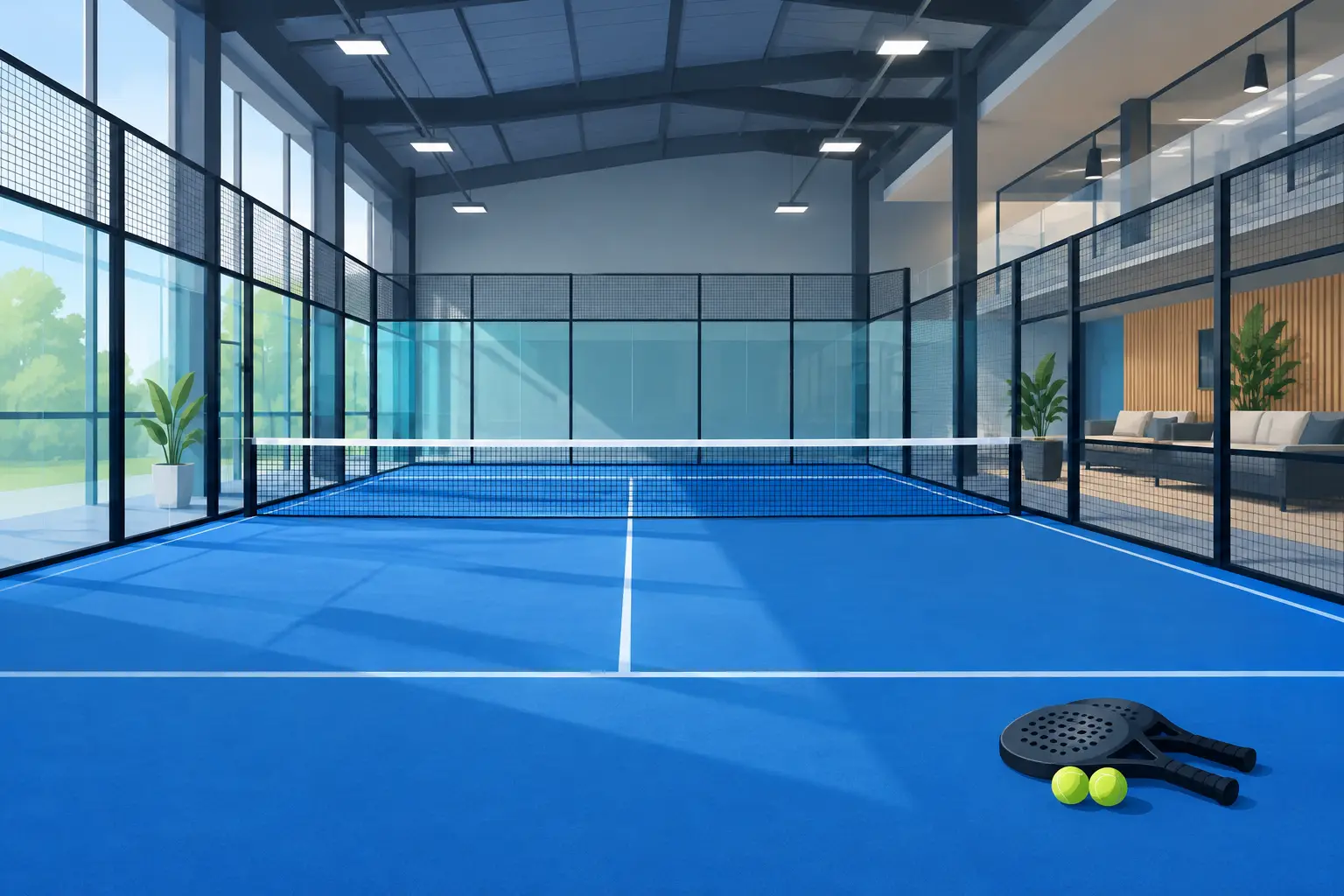
At The Padel Lounge, the indoor setting makes it easier to keep that routine rolling through the seasons. Full-size courts, a private training-size court and a space designed to socialise around the sport mean a session can fit a range of goals, from a relaxed hit to serious player development.
How Hard Is a Padel Session?
It depends on who you play with, how long you are on court and how efficiently you move. A social beginner session may include plenty of pauses while everyone learns serving positions, scoring and wall play. It can still be active, but the intensity is generally more manageable.
A close match between confident players is another story. Longer rallies, faster transitions, sharper volleys and more aggressive coverage can turn an hour into a demanding conditioning session. Doubles keeps the court manageable, yet the need to react quickly means you are rarely fully resting while the ball is live.
If you are new to regular exercise, begin with a sensible session length and give your body time to adapt. Wear supportive court shoes with enough grip for lateral movement, warm up your ankles, calves, hips and shoulders, and drink water before you feel thirsty. A few minutes of easy rallying and controlled movement before playing properly can make the session feel far better.
Technique also protects your energy. New players often sprint for every ball, swing too hard and stand too close to the net or back glass. Learning court position, using compact swings and recovering between shots makes the game safer, more enjoyable and surprisingly more physical in the right ways. You will last longer because you are moving with purpose instead of scrambling.
Build Fitness Without Making It Feel Like Training
The simplest approach is to make padel part of your regular week. One social session is a strong start. Add a second hit when your body is comfortable, or mix a match with a coaching session that improves your movement and shot selection. Progress does not need to be dramatic to work.
If performance is your focus, use the court as feedback. Are you late to balls in the third set? Work on repeat sprint capacity and recovery. Do you lose balance on defensive shots? Prioritise lower-body strength and controlled lateral movement. Does your shoulder tire during overheads? Build gradually, refine your technique and avoid chasing power before your body is ready.
Most of all, choose a format you will keep coming back to. A competitive league can light a fire for one player; a social mixed session may be the better fit for another. There is room for both. Together, we play, and the fitness follows.
Book the session that suits your level, bring a mate or meet one on court, and give yourself permission to be a beginner. The first rally may feel unfamiliar. A few weeks later, you may notice you are moving faster, recovering sooner and looking forward to the next point.