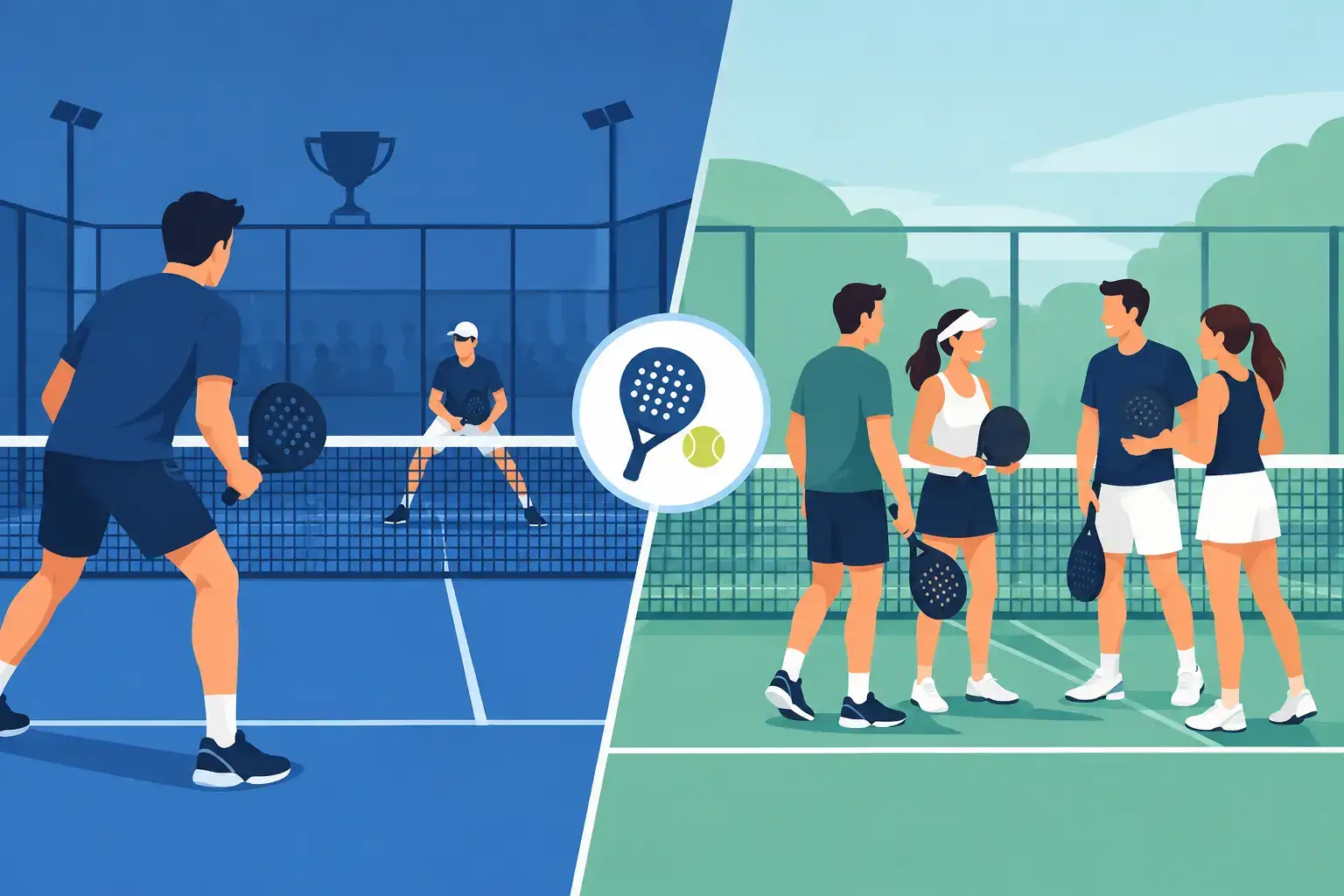
A group chat goes quiet the moment someone suggests another dinner. Suggest a padel match instead and suddenly there is a plan. Can friends play padel? Absolutely – it is one of the best ways to turn a catch-up into something active, competitive and properly fun, even when not everyone has played before.
Padel is built for doubles, which means the game naturally rewards teamwork, chat and shared momentum. You do not need a huge swing, a tennis background or a bag full of gear to get started. Bring your crew, split into teams and prepare for a hit that can go from relaxed rally to fun fast furious in a few points.
Why friends play padel so easily
Four players is the sweet spot. Two teams of two gives everyone a role, plenty of ball touches and the classic doubles moments that make a social match memorable: a scrambling save off the glass, a cheeky lob, a point won after the ball has somehow stayed alive three times longer than expected.
The court is smaller than a tennis court and enclosed by glass, so the ball remains in play more often. That means fewer long walks to collect balls and more rallies from the first session. It also helps mixed-ability groups. A strong player cannot simply blast every point away if the other team learns to use positioning, lobs and the walls.
There is a competitive edge, but padel is not only for serious players. Friends can make it as social or as sharp as they like. Keep score and chase bragging rights, or rotate partners every set and make the whole night about laughs, movement and a post-match bite.
Can friends play padel with different skill levels?
Yes, and this is where a little structure makes a big difference. If one mate has played racquet sports for years while another is picking up a racket for the first time, avoid stacking the experienced players on one side. Split them up so each team has someone who can settle the rally and offer a few pointers without turning the match into a lesson.
New players usually find padel more approachable than they expect. Serves are underarm, the racket is solid rather than strung, and the walls are part of the game. The first few shots may feel unusual, especially when the ball rebounds behind you, but the learning curve becomes exciting quickly.
Give beginners one simple focus: get the ball over the net and into the court before worrying about power. For more experienced players, the challenge is to construct points rather than finish everything immediately. Play with control, use the corners and give your friends a chance to join the rally. Better rallies make better social games.
Set up a social padel match that works
Start with a 60-minute booking if your group is trying padel for the first time. It is enough time to explain the basics, warm up and play a few short sets without anyone feeling like they have signed up for a marathon. A 90-minute or two-hour session suits groups that already know the game or want time to rotate partners.
Four people is ideal, but do not cancel if your numbers shift. Three players can still have a lively hit by rotating the solo player every few games. Two friends can rally, practise serves and play a modified singles game, although padel is at its best when four people share the court. If your group is larger, book extra time and rotate pairs after each short set so no-one spends too long on the sideline.
Before the first ball, agree on the mood. Are you playing a proper match? Are you swapping teams every set? Is the quietest person in the group getting first pick of their partner? A quick decision prevents the usual social-sport chaos and gets everyone playing faster.
At The Padel Lounge, professionally supplied rackets and balls remove a major first-timer barrier. You can arrive ready to play, rather than hunting down equipment or wondering whether your old tennis racket will do the job.
Use a simple scoring format
Traditional padel scoring follows tennis: 15, 30, 40 and game, with sets usually played to six games. That works well for players who already understand it, but it can slow a first social session while everyone remembers the score.
For an easier start, play first to four games and use a deciding point at deuce. At 40-all, the receiving team chooses which side receives the next serve. Win that point, win the game. It keeps the pace up and makes every close game feel big.
If you have six or eight friends, play short games and change partners regularly. Padel Americano-style rotations are brilliant for groups because players move through different pairings, meet everyone on court and stay involved. The exact maths can wait until later. For a casual session, simply ensure everyone gets a fair run with and against different people.
The few rules your group needs
You do not need to memorise a rulebook before your first match. Learn the foundations, then let the game teach you the rest.
The serve is underarm. Stand behind the service line, bounce the ball and hit it below waist height diagonally into the opponent’s service box. The returner lets it bounce once before hitting it back. After that, the ball can be volleyed or played after one bounce.
The glass is in play after the ball has bounced on your side of the court. If a ball lands in and rebounds off the back or side glass, you can return it. If you hit your own glass before the ball crosses the net, you lose the point. That one takes a few rallies to settle in, so expect some laughs and a couple of dramatic misreads early on.
The biggest beginner mistake is standing too far back. Start around the middle of your side, move forward together when your team has control, and leave enough room behind you for balls that come off the glass. Talk to your partner. A simple “mine”, “yours” or “leave it” wins more points than a heroic swing.
Make the first session better than a random hit
Arrive a few minutes early and spend five minutes rallying gently. Hit straight down the middle, then try a few shots off the back glass. It is not about perfect technique. It is about helping everyone find the bounce before the score starts.
Keep the power low at first. The best early padel points come from consistency, placement and patience. Aim for the centre, where opponents have to decide who takes the ball. Use a lob when the other team is crowding the net. Let the walls work for you instead of trying to hit winners from every position.
Social etiquette matters, too. Celebrate great points on both sides. Give a new player time to serve without a running commentary. If the score gets confusing, replay the point and move on. Nobody remembers the disputed second game of a casual Thursday hit. Everybody remembers the rally that had all four players sprinting and laughing.
A sport that can fit your whole crew
Padel works for workmates, family groups, old school friends and couples looking for a fresh way to move. It can be high-energy without being intimidating, and it gives people something to talk about between points as well as after the match.
For players who prefer a more private session, a training-size private court can create a comfortable space to learn, practise or play with your chosen group. That option can be especially valuable for hijab-friendly play and anyone who wants a little more privacy while still enjoying the game.
Pick a time, bring the mates who always say they should do something active, and keep the first match simple. The glass will create surprises, the rallies will get longer, and before long your group will be planning the rematch.