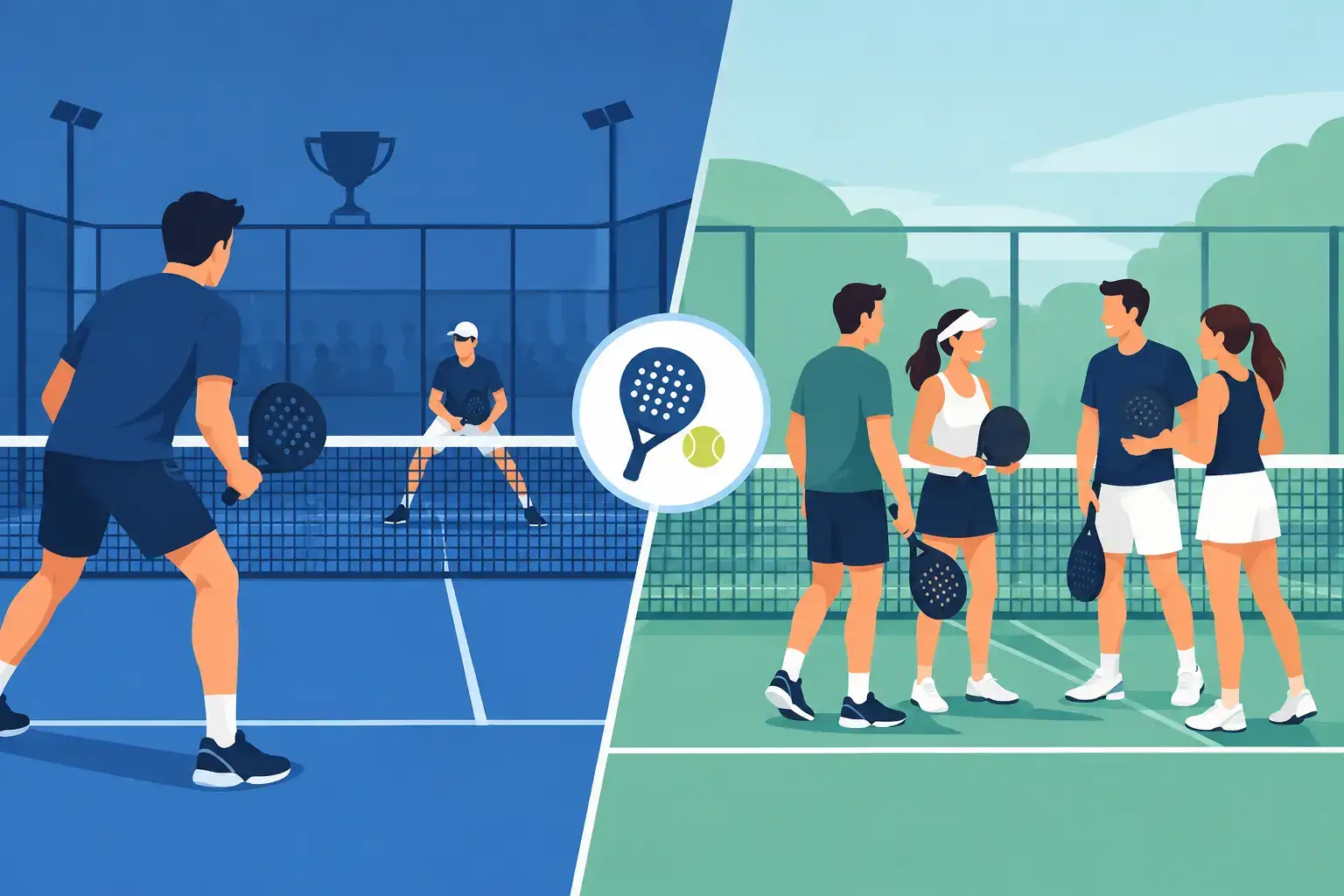
A great work event should give people something better to talk about than the quarterly numbers. When you host corporate padel event, you create the kind of shared challenge that gets the competitive crew fired up, gives quieter colleagues an easy way in, and keeps the conversation going well after the final point.
Padel is fun, fast, furious – but it is also remarkably friendly for first-timers. The court is compact, the walls keep rallies alive, and doubles means nobody has to carry the whole team. That makes it a strong choice for businesses looking to build connection without forcing everyone through another awkward icebreaker.
Start with the outcome, not the court booking
Corporate padel works best when the format matches the reason you are bringing people together. A client event needs time for conversation and a polished social atmosphere. A team celebration can lean into friendly rivalry. A staff wellbeing session might prioritise movement, low pressure and plenty of laughs over a winner’s podium.
Be clear on the outcome before choosing a date, format or guest list. Ask whether the day is designed to reward the team, welcome new starters, strengthen relationships across departments, entertain clients, or uncover the office’s next serious competitor. There can be more than one answer, but one should lead the plan.
That decision changes the run sheet. A high-energy team challenge benefits from short matches, a visible scoreboard and a final. A relationship-building event needs longer breaks, food, seating and enough flexibility for guests to chat between games. Trying to do everything at once can leave the event feeling rushed.
Choose a corporate padel event format everyone can play
The strongest format is rarely the most complicated one. Most workplace groups include complete beginners, former tennis players, regular gym-goers and at least one person who claims they are “just there for moral support”. Build an experience that welcomes all of them.
Padel Americano for mixed groups
Padel Americano is made for corporate energy. Players rotate partners and opponents over a series of short timed rounds, collecting individual points along the way. Nobody is eliminated early, colleagues meet more people, and the leaderboard creates just enough edge without taking itself too seriously.
It is particularly effective for larger groups and mixed abilities because the quick rotations keep the room moving. It also gives people an easy conversation starter: who is climbing the board, who has found an unexpected winning partnership, and who is making a late charge.
Team challenge for department rivalry
For a more traditional competition, divide guests into teams before they arrive. Teams can represent departments, project groups or a playful theme that fits the company culture. Run pool matches, then finish with a short knockout round or grand final.
This format brings bigger sporting theatre, especially if spectators can watch from a lounge area with a coffee or cold drink in hand. The trade-off is that newer players may feel more exposed if teams are selected purely on skill. Keep it balanced by mixing experience levels and rewarding more than the champions – best team spirit, rally of the night or most improved pair all count.
Learn, play, socialise
If most guests are new to padel, start with a coach-led introduction. Cover the basic serve, how the walls work, court positioning and a few simple rules, then move straight into short social matches. No long lecture required. People learn padel quickest with a racket in hand.
This is the right call for client groups, leadership teams or organisations that want participation to feel genuinely accessible. Supply rackets and balls, keep the coaching practical, and make it clear that no prior racquet-sport experience is needed.
Make first-timers feel part of the action
The difference between a good corporate sport event and a great one is often made before the first ball is hit. People need to know what to wear, whether they need their own equipment, how hard the session will be, and whether they will be left standing awkwardly on the sideline.
Send a short pre-event note with the essentials: comfortable activewear, proper court shoes if possible, a water bottle and a readiness to have a crack. Let guests know that rackets, balls and guidance are provided. If there is a dress theme or company colours, say so early. It can lift the atmosphere without adding complexity.
On arrival, welcome people in groups rather than handing them a fixture and hoping for the best. Introduce the host, explain how rotations work, point out where bags and drinks can go, and tell everyone exactly when the first round begins. A confident start helps nervous players settle quickly.
It also pays to offer a low-pressure role for anyone unable or reluctant to play. They can score, cheer, capture photos, support their team or join the social side. Inclusion is not about making every guest compete. It is about making every guest feel invited.
Get timing right and protect the social side
For most businesses, 90 minutes to two hours of court time is the sweet spot. It is long enough for a warm-up, several matches and a proper sense of occasion, without turning into an endurance test. Add time before or after for food, drinks and the kind of chats that do not happen in a meeting room.
An after-work session is an easy fit for many teams, while a late-morning or early-afternoon event can work well for off-sites. Indoor padel removes the weather gamble, which matters when you are coordinating busy calendars and a group that has already blocked out the time.
Avoid overfilling the schedule. A minute-by-minute plan might look efficient, but it leaves no room for a match that runs late, a player who needs a quick rules refresher, or the spontaneous group photo everyone actually wants. Build in breathing room. The event should feel sharp, not frantic.
Use the venue as part of the experience
A court alone is not a corporate event. The setting needs to carry the experience from arrival to final farewell. Look for professional-standard courts, clear scoreboards, spectator seating, quality lighting, high ceilings and a place to regroup between rounds. Food and café service matter more than organisers sometimes expect – hungry players do not stay energised for long.
At The Padel Lounge in Greenacre, teams can play on internationally approved indoor courts, use supplied professional equipment, then move into lounge and chill spaces to recap the best points. The training-size private court can also suit focused coaching, smaller executive groups or guests who value a more private playing environment.
Practical details count too. Parking, Wi-Fi, easy entry, bathrooms and a clear arrival point take pressure off the organiser. They may not be the glamorous parts of the event, but they are what make the experience feel considered.
Build a little competition, then keep it friendly
A corporate event needs stakes, even if they are light-hearted. A leaderboard, team names, a final match and a small prize give the session momentum. Announce key scores, celebrate a long rally and give people something to chase.
But read the room. If the group is highly competitive, lean into timed rounds and a proper final. If it is a first-time group, place the emphasis on shared points, rotation and encouragement. Padel rewards teamwork and smart positioning more than brute force, so newcomers can make an impact quickly.
The best hosts set the tone themselves. Celebrate effort, welcome the mishits, and do not let one serious player turn social padel into a grand slam final. The goal is for people to leave feeling better connected and keen to come back.
Give the event a reason to continue
A single corporate padel event can be a brilliant reset. A recurring one can become part of how a team connects. If the response is strong, turn the night into a monthly social, an inter-office ladder or a seasonal company league. Keep it optional, keep it welcoming, and let people progress at their own pace.
For businesses with a community focus, padel can also add purpose to the fun. A charity point challenge, a fundraising entry component or a donation tied to winning teams gives the event another layer without making it heavy.
The real win is not the trophy. It is the colleague who arrives convinced they are not sporty, hits a brilliant winner off the glass, and starts asking when the next session is. Give your people a court, a team and a reason to play – the rest tends to take care of itself.