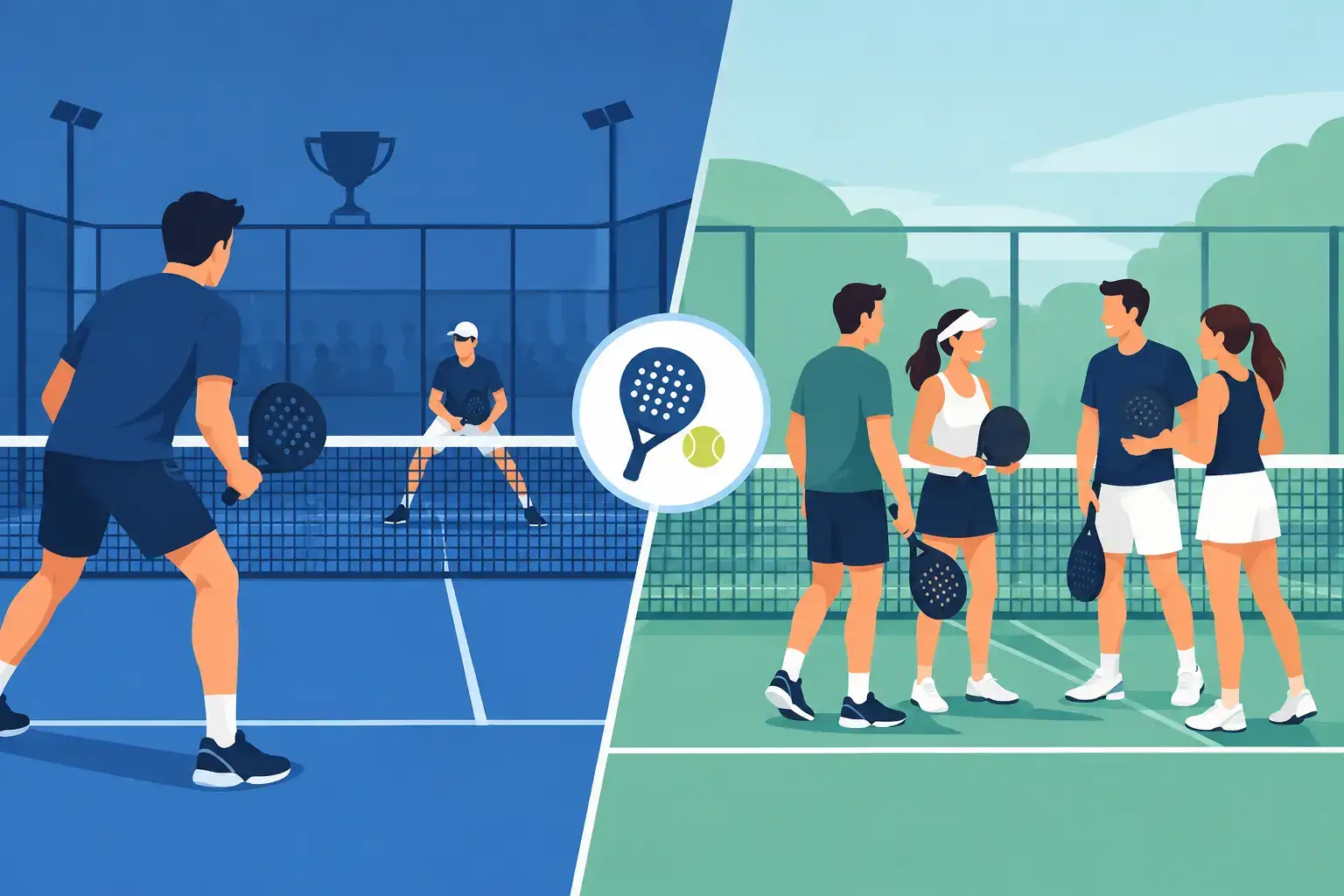
A treadmill can tell you your pace. A gym mirror can show you your form. But neither can recreate the feeling of chasing down a ball, landing a winner off the glass and high-fiving your mates between points. When it comes to padel versus gym, the better choice is often the one you are genuinely excited to do again next week.
That does not mean the gym is out. Strength training has real value, especially for building power, supporting joints and improving athletic performance. Padel brings something different: a fun, fast, furious workout that combines movement, skill, competition and connection in one session. For plenty of Western Sydney players, that is the difference between a fitness plan that lives on a notes app and a routine that sticks.
Padel versus gym: what are you training for?
The gym is built for precision. You can target a muscle group, follow a programme and gradually increase load. If your goal is to build strength, improve body composition, rehabilitate an injury under professional guidance or train around a specific performance target, that control is hard to beat.
Padel is built for play. You move in every direction, react to unpredictable shots, accelerate, stop, rotate and reset – all while reading the game. A close match asks for repeated short bursts of effort, sustained concentration and quick decision-making. You may not be tracking sets and reps, but your body is working from the first serve to the final point.
The key difference is simple. Gym training is usually planned around the body part or physical quality you want to improve. Padel training is driven by the game, with fitness arriving as a powerful by-product. Neither approach is automatically better. It depends on what gets you moving and what you want your training to deliver.
The fitness comparison is closer than you think
A good padel session can challenge cardiovascular fitness, agility, coordination, balance and lower-body endurance. Because the ball comes back quickly and rallies can change direction in a second, you are constantly adjusting your feet and body position. Your legs handle lunges and split steps, your core works through rotations, and your shoulders and arms control volleys, bandejas and smashes.
A gym session can be equally demanding, but the work is more controllable. You choose the intensity, rest periods and exercise selection. That is ideal when you need progressive overload or a lower-impact session. It can also make it easier to train consistently when you only have 30 minutes and want to focus without relying on court availability or other players.
Padel is not a replacement for every gym goal. It will not reliably build maximum strength in the way heavy resistance training can. If you want to deadlift more, develop serious muscle mass or work through a carefully prescribed return-to-training plan, the weights room has a clear role.
But if your goal is general fitness, sharper movement and more energy through the week, padel can absolutely carry its weight. The format matters too. A social hit may feel more relaxed, while an Americano session or league match can become a serious sweat. You set the pace through the level you play, the people you play with and how often you get on court.
Motivation is a training tool
The best programme is not always the most sophisticated one. It is the one you can repeat.
Gym motivation can come from numbers: a heavier lift, another kilometre, a stronger body or a personal goal. For some people, that focus is deeply satisfying. For others, a solo workout starts to feel like another item on a long to-do list.
Padel gives you a reason to show up that has nothing to do with forcing yourself through exercise. Your friends have booked a court. Your doubles partner is waiting. You want to improve your backhand. You have a rematch after losing a tight one last week. Suddenly, fitness is not the chore – it is part of the fun.
That social commitment matters. A workout booked with other people is harder to cancel, and the post-match chat makes the session feel like time well spent rather than time taken away from your life. For busy adults, parents and friendship groups, that can be the real win.
Skill keeps padel fresh
A gym programme can stay interesting when it evolves, but repetition is part of the deal. There is value in that repetition: it is how strength is built. Still, it is not for everyone.
Padel has a learning curve that keeps every session alive. Beginners can enjoy rallies quickly, especially in doubles, yet there is plenty to chase as you improve. Better positioning. Cleaner volleys. Smarter use of the glass. More controlled lobs. A serve that starts the point with intent rather than simply putting the ball in play.
You do not need to arrive as a racquet-sport player. The smaller court and doubles format make padel approachable, while the walls keep points going longer than many newcomers expect. That means more touches of the ball, more laughs and more chances to learn without the pressure of needing a perfect swing.
For players who want more than a casual hit, structured coaching and match formats add purpose. You can work on the details, test them under pressure and measure progress against different opponents. That blend of accessible entry and genuine depth is why padel holds attention long after the first session.
The social side is not an extra
There is nothing wrong with training alone. Some people need that hour with headphones on, a clear plan and no conversation. The gym can be a reset button.
But many people do not only want to exercise. They want to meet friends, bring a partner, introduce the kids to a sport or join a community without feeling like an outsider. Padel makes that easy because doubles is naturally collaborative. You share the court, celebrate points and learn together. Even the competitive players tend to stay for the conversation once the match is done.
That is where a purpose-built venue changes the experience. At The Padel Lounge, internationally approved indoor courts, supplied rackets and balls, lounge areas, café service and spectator seating remove the usual friction around trying something new. Players can arrive, play and stay a while. For those seeking privacy, the training-size private court also creates a comfortable space for focused sessions, including hijab-friendly play.
When the gym is still the right call
Choosing padel does not mean pretending strength work is irrelevant. A smart combination is often the strongest option.
Gym sessions can improve the qualities that make you better on court: stronger legs for repeated movement, a stable core for rotation, resilient shoulders for overhead shots and better control through deceleration. Two short strength sessions each week can complement regular padel without turning your schedule into a full-time athletic project.
The gym may also be the better choice on days when you are carrying a niggle, need a predictable workload or simply want a quiet session. Padel involves quick changes of direction and can be demanding on calves, knees and shoulders when technique, warm-up or recovery are ignored. Start at a pace that suits your current fitness, wear supportive court shoes and give your body time to adapt.
If you are new to exercise altogether, both options are valid. The question is not whether one is more respectable than the other. It is whether the environment makes you feel capable enough to return.
Make your routine work in real life
For the person who enjoys routine, a weekly gym plan with one social padel session can add variety without losing structure. For someone bored by machines, two or three padel sessions may be the momentum shift they need. Competitive players might build their week around coaching, league matches and targeted strength work. Families may prefer a weekend court booking that gets everyone active at once.
There is no prize for choosing one fitness identity and sticking to it forever. Your routine can change with your goals, energy, work hours and season of life. What matters is having movement you look forward to, a challenge worth chasing and people who make it more enjoyable.
Book the workout that makes you want to come back, then give yourself enough time to see what happens when play becomes part of your week.