The best rallies in padel often look chaotic from the outside: balls ricocheting off glass, players chasing down lobs and a quick-fire exchange at the net. The padel rules are what make that chaos brilliant. Learn a few key calls before you step on court and your first match goes from hesitant to fun, fast, furious.
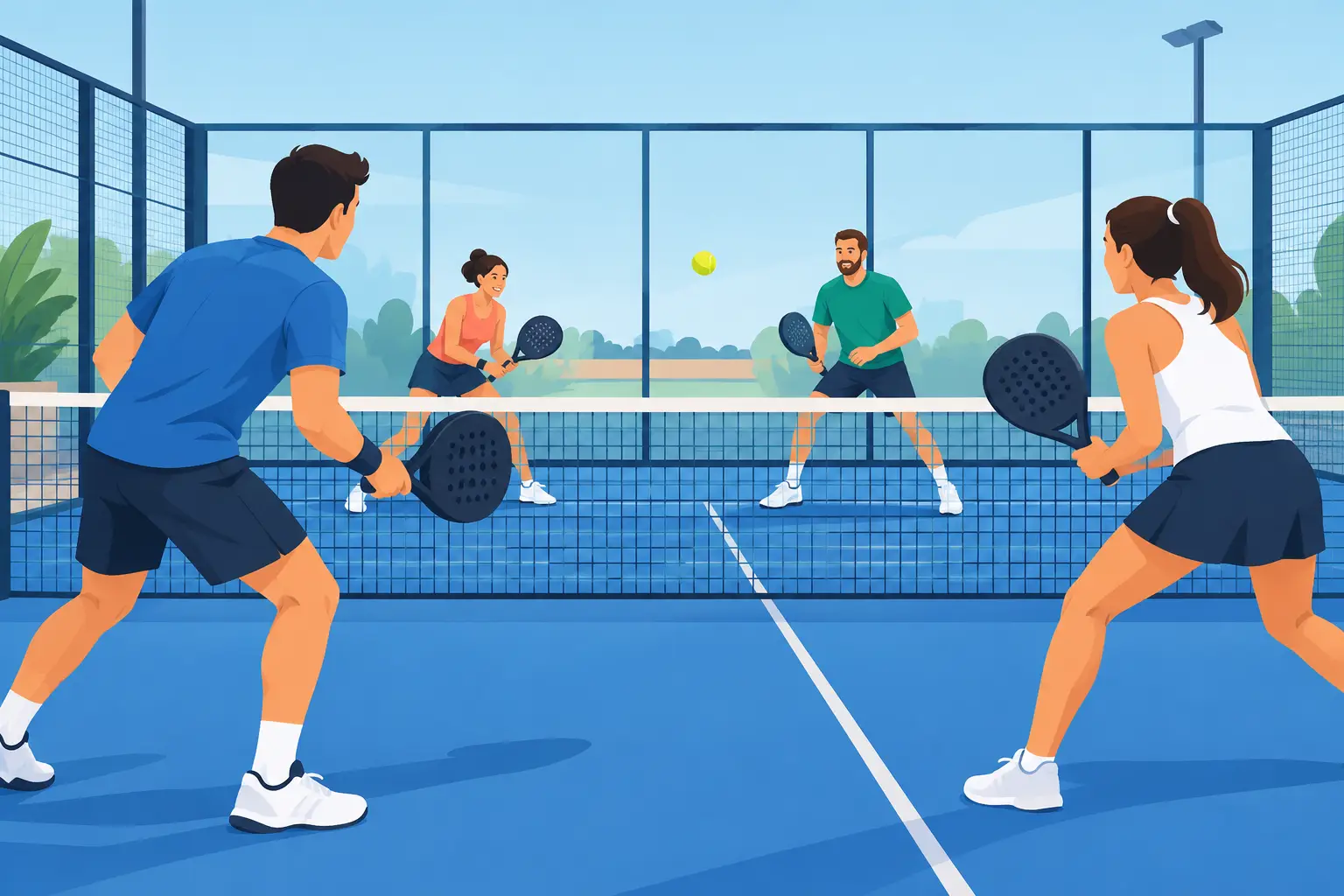
Padel is usually played as doubles, which means communication matters almost as much as your forehand. The format is welcoming for newcomers, but it has enough tactical detail to keep experienced players thinking point after point. Here is how to serve, score, use the walls and keep play moving.
The padel rules that shape every match
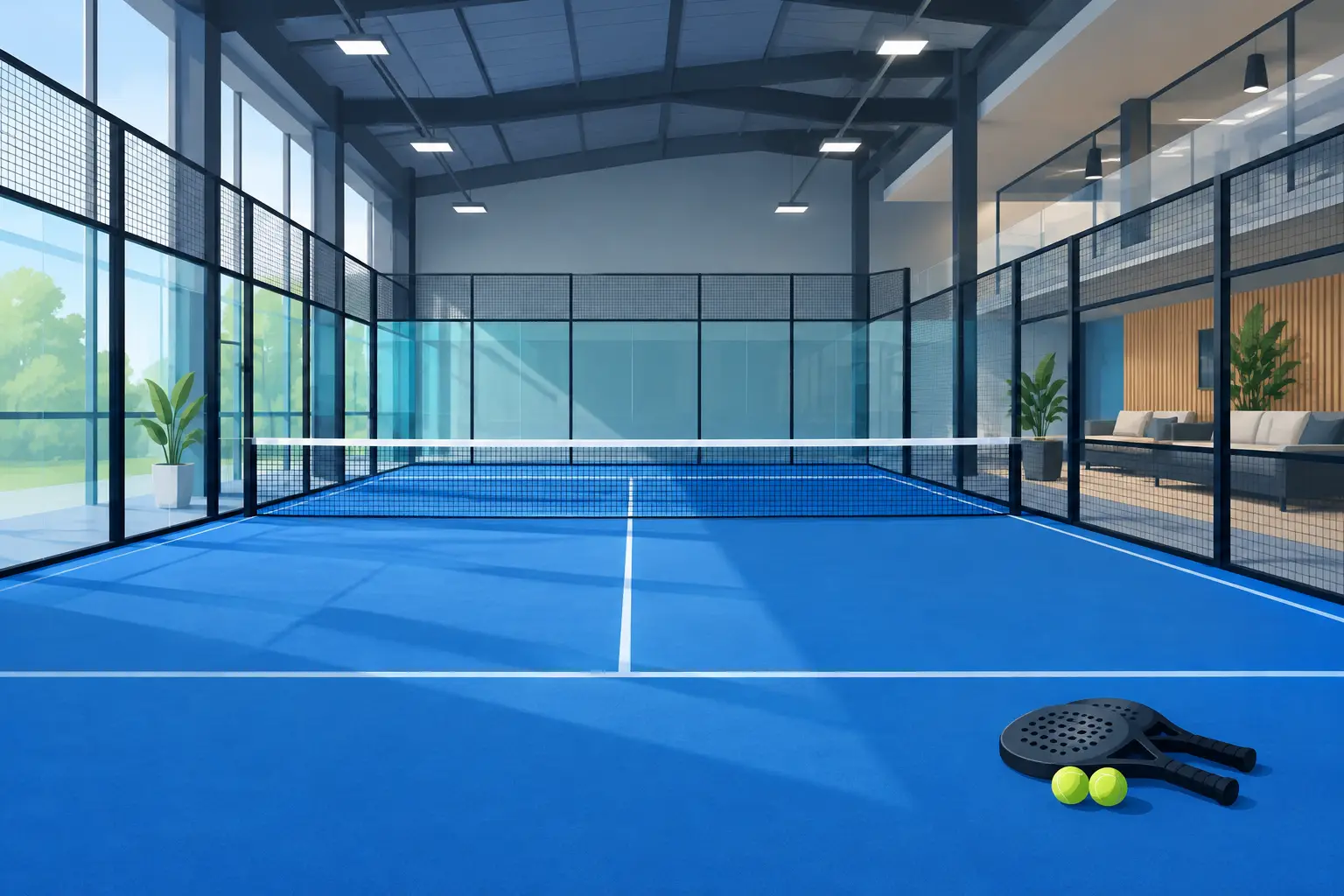
A standard padel court is 20 metres long and 10 metres wide, split by a net. It is enclosed by glass and mesh fencing, and those walls are live once the ball has bounced in the correct part of the court.
The central rule is simple: the ball must bounce once on your opponent’s side before it can touch their glass wall. If it lands in and then rebounds off the glass, play continues. That is not a lucky break – it is the heart of padel.
You can also use your own back or side glass to return a ball, provided it has first bounced on your side of the court. This is where patience pays off. Instead of rushing to hit every ball in the air, let it come off the glass, set your feet and play the next shot with purpose.
The fence is less forgiving. If your shot reaches the opponent’s mesh fence before bouncing in their court, it is out. If the ball bounces twice on your side, you lose the point. And if you hit the ball into the net, the point is over.
Serving in padel: underhand, diagonal, decisive
Every point starts with an underhand serve. The server stands behind the service line, bounces the ball and hits it below waist height into the diagonally opposite service box. Start from the right side of the court for the first point, then alternate sides after every point.
The returner must let the serve bounce before hitting it. Unlike a tennis return, you cannot volley a serve. Once the return is in play, volleys are allowed, and that is when teams look to take control of the net.
You get two chances to make a legal serve. A serve is a fault if it misses the correct box, hits the net and does not land in the right box, or bounces in the service box before striking the side fence. If a serve clips the net and still lands correctly without creating a fault, call a let and serve again.
There is no need to blast the ball. A low, controlled serve that stays awkward around the receiver’s feet is usually more useful than a big swing. At The Padel Lounge, that is one of the first lessons new players pick up: build the point, then bring the pressure.
Where should the receiver stand?
There is no single right answer. Stand further back if the serve is deep or you want time to read the glass. Stand closer if you can attack a shorter serve early. The key is to leave yourself enough room to let the ball bounce and react.
If you are new, call out who takes the middle ball before the first serve. Doubles gets messy when both players go for it, or worse, both leave it.
How padel scoring works
Most matches use traditional tennis scoring: love, 15, 30, 40, game. A team needs four points to win a game, with a two-point margin required at deuce.
At 40-40, some social competitions use advantage scoring. The next point gives one team advantage, and they must win the following point to take the game. If they lose it, the score returns to deuce.
Other events use golden point at deuce. The receiving team chooses which player receives, and whoever wins that single point wins the game. Golden point creates pressure, speeds up fixtures and can make every league night feel like a final. Check the format before play, because both systems are common.
A set is generally first to six games with a two-game lead. At 6-6, a tie-break is usually played. Matches are often best of three sets, although social sessions, junior formats and time-based events may use shorter scoring to keep everyone rotating through the court.
The practical rule: confirm whether you are playing advantage or golden point, and whether the final set has a tie-break, before the warm-up ends. It prevents awkward debates when the match gets tight.
Using the glass without losing the point
The walls are not decoration. They give you time, angles and a second chance to turn defence into attack.
When an opponent plays deep, resist the urge to swipe at the ball before it reaches the back glass. Let it bounce, move into position and allow the glass to bring it back towards you. A calm return down the middle is often better than a low-percentage winner from the corner.
On attack, use the glass to make opponents uncomfortable. A ball that bounces low near the side glass can force a difficult pickup. A deep lob can push net players back, opening the court for your team to advance. The goal is not to hit hard at every opportunity. It is to make the next ball easier for you and harder for them.
You may hit the ball after it rebounds from your own glass, but you cannot let it bounce twice. You can volley a ball before it bounces on your side, but only after the return of serve. These small distinctions are why padel rewards court awareness as much as power.
Net play, lobs and the middle ball
Winning the net is a major advantage in padel. From there, you can volley with control, cut off angles and keep opponents defending from the back glass. But charging forward without a plan leaves space behind you.
Use a lob when you are under pressure or want to reset the point. A well-placed lob travels over the net players and forces them to retreat. That gives your team time to move forward together. If one player comes in while the other stays back, the gap between you becomes a target.
The middle of the court is another high-value area. Balls played between opponents create confusion, reduce angles and often produce a weaker reply. Keep your calls clear: “mine”, “yours”, “leave” and “switch” are short, useful and far better than silence.
Avoid trying to finish every volley. A compact volley to the feet can set up the next shot. Padel points are often won by the team that holds position and waits for the right ball, not the team chasing a highlight reel.
Common padel rule mistakes new players make
New players most often lose points by forgetting that the ball needs to bounce on the opponent’s court before touching their wall, trying to volley the return of serve, or hitting a serve above waist height. All are easy fixes once you slow down and understand the sequence of play.
Another common mistake is assuming every ball off the glass is out. If it bounced in first, keep playing. Give the ball a chance to come back into your strike zone. The walls can feel unpredictable in your first session, but they quickly become part of the fun.
Finally, make fair calls. If there is uncertainty in a social match, replay the point. In organised competition, follow the event rules and ask the organiser if needed. Good padel has intensity, but it also has respect. The best courts are competitive without being precious.
Play the rules, then play your game
You do not need a perfect bandeja or a tournament-ready backhand to enjoy padel. Start with a legal serve, get the return in, use the glass when the ball is deep and move with your partner. The rest develops through rallies, laughs, close games and the occasional ball that takes a wild bounce.
Bring your energy, call the score clearly and give yourself permission to learn on court. Once the rules become instinct, you can focus on the good stuff: chasing the next point with your team and staying around for the post-match chat.