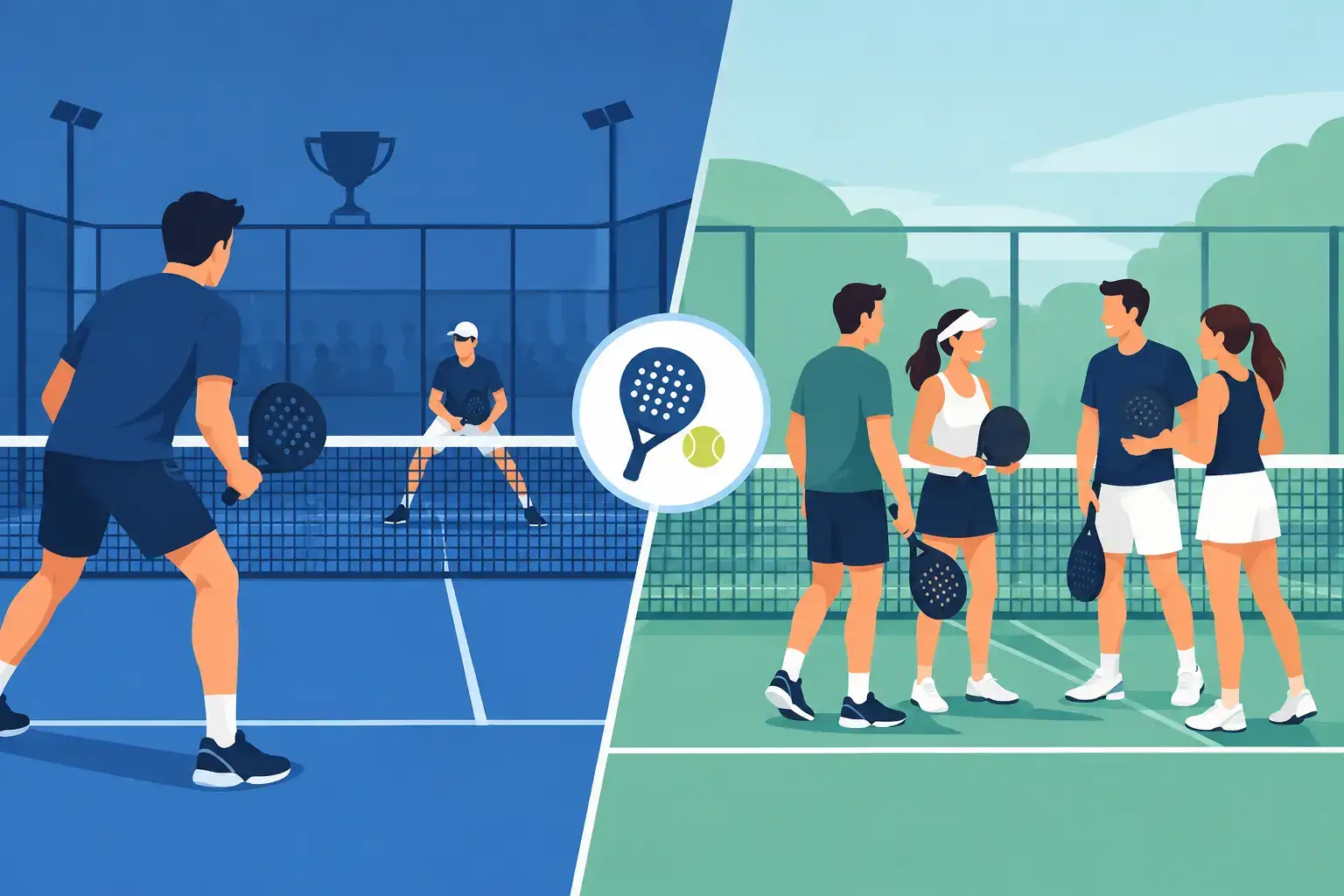
Your best padel session is not always the busiest one. The choice between a private court versus group sessions comes down to what you want from the hour: focused reps, privacy and your own pace, or fresh opponents, coached drills and a bigger social hit.
Both can move your game forward. Both can be seriously fun. The difference is in the experience you build around the ball.
Private court versus group sessions: the real difference
A private court gives you control. You choose who plays, how hard the session runs and what success looks like. That might mean a quiet hit with a mate, a family game where everyone is learning, a technical coaching session, or a high-intensity battle between four competitive players.
Group sessions bring structure and variety. You arrive, meet other players at a similar level and work through organised drills, match scenarios or rotating games. There is less control over the exact people on court, but far more opportunity to test your decision-making against different styles.
Neither is automatically better. A player preparing for league matches may need both: private time to sharpen a weak volley, then group play to see whether that new habit holds up when the points get fast and furious.
Choose a private court when the session needs to be yours
Private court time is for players who want fewer distractions and more intention. It suits beginners who would rather learn the basics away from a full group, as well as experienced pairs chasing specific improvements without stopping the flow every few minutes.
The biggest advantage is flexibility. You can spend 20 minutes on serve and return patterns, play short games to practise the golden point, or simply rally until your timing clicks. There is no need to keep pace with a larger group and no pressure to perform for people you have just met.
More focused coaching and repetition
If you are working with a coach, a private setting makes every ball more useful. You can repeat the same bandeja, volley or wall recovery until the movement feels natural, rather than moving on because the group programme needs to progress.
That repetition matters in padel. Good players make difficult shots look easy because their positioning and preparation happen early. A focused private session creates the space to slow the action down, correct the detail and build it back up at match speed.
A training-size private court can be particularly valuable for this work. The shorter format keeps the action close, increases touches and gives coaches a clear environment for footwork, control and tactical positioning. It is not a replacement for a full-size match court, but it is a powerful development tool.
Privacy that lets everyone play freely
A private booking can also make sport feel more accessible. Some players prefer a closed setting for cultural, religious or personal reasons, including hijab-friendly play. Others simply want a relaxed session with family, close friends or colleagues without a crowd around them.
Privacy is not about taking the social side out of padel. It is about choosing your own crew and feeling completely comfortable on court. When people feel at ease, they tend to stay longer, take more chances and enjoy the game more.
The best option for your own group
Got four players who want a proper match? A private court is the cleanest answer. You can arrive, warm up, set the score and settle the debate without waiting for rotations.
It is also a strong choice for birthday catch-ups, team social events and family sessions with mixed abilities. Stronger players can make the game more inclusive by serving underarm, playing to space rather than power, or setting simple challenges that give newer players more touches.
The trade-off is that you need to organise the group yourself. If someone pulls out, you may be short a player. And if your usual mates all play the same way, your game can plateau without new tactical problems to solve.
Choose group sessions when you want momentum
Group sessions are where padel starts to feel bigger than a booking. You walk in knowing the format is organised, the balls are moving and there are people ready to play. For busy adults, that takes a lot of friction out of staying active.
They are especially useful when you are new to the sport or new to Western Sydney’s padel community. You do not need to convince three friends to try something unfamiliar. Turn up, get involved and let the session do the work.
Learn through different players
Every opponent gives you a different question to answer. One pair may attack the net relentlessly. Another may defend all day and force you to construct the point. Someone else might have a sharp lob that keeps pushing you back from the net.
That variety develops court awareness far faster than playing the same pair every week. You learn to communicate with different partners, read unfamiliar shots and adjust your tactics without overthinking. Those are match skills, not just technique skills.
Structured group training adds another layer. A good session gives you a clear theme, whether it is controlling the middle, using the glass, defending the corner or transitioning as a pair. The coach can then place that theme into live drills, so the lesson does not stay theoretical.
Build confidence without needing your own crew
For a complete beginner, a group can feel intimidating for about five minutes. Then the first rally lands, someone laughs at a wild bounce off the glass, and the nerves usually disappear.
The key is joining a session matched to your level. Beginners need time to understand scoring, positioning and the rules around the net. Intermediate players need higher ball volume and tactical pressure. Advanced players need intensity, quality opponents and specific feedback. The right group should challenge you without making every point a survival exercise.
Social nights, Americano formats and league-style competition each offer a different version of that experience. Social play keeps the mood light and welcoming. Rotating formats help you meet more players. Leagues add accountability, competitive edge and a reason to keep improving between rounds.
The trade-off is less control. You may not always play with your favourite partner, and a group session cannot pause for 15 minutes while you perfect one shot. That is precisely why it complements private time so well.
Match the format to your goal
Think about the result you want when you leave court. If the answer is, “I want to fix my backhand volley,” book private time or a focused coaching session. If it is, “I want to meet players and get match-fit,” a group session has the edge.
Private play works best when your goal is specific. It is ideal for technical development, private recreation, partner chemistry and sessions where comfort matters as much as competition. Group play works best when your goal is broad: build fitness, gain match experience, learn from variety and become part of a playing community.
For juniors, the balance can be especially effective. Private coaching can establish sound movement and safe technique, while junior group sessions teach teamwork, resilience and the confidence to compete. Parents get the benefit of a development pathway that feels fun rather than overly formal.
At The Padel Lounge, that choice can sit under one roof: internationally approved full-size courts for proper match play, plus Australia’s first training-size private court for focused development and privacy-led sessions. Add supplied rackets and balls, high indoor ceilings, scoreboards and spaces to hang around after the final point, and the session can be as serious or social as you want it to be.
The strongest players use both
There is a tempting idea that committed players should only train, while social players should only join group games. Padel does not work like that. The player who trains alone without match pressure can struggle to apply their skills. The player who only plays matches may keep repeating the same mistakes.
A smart rhythm could be one private session every fortnight for targeted work, alongside a weekly group training session, social night or competitive format. If you only play casually, reverse the emphasis: book a private court with friends most weeks and use a group event when you want a new challenge.
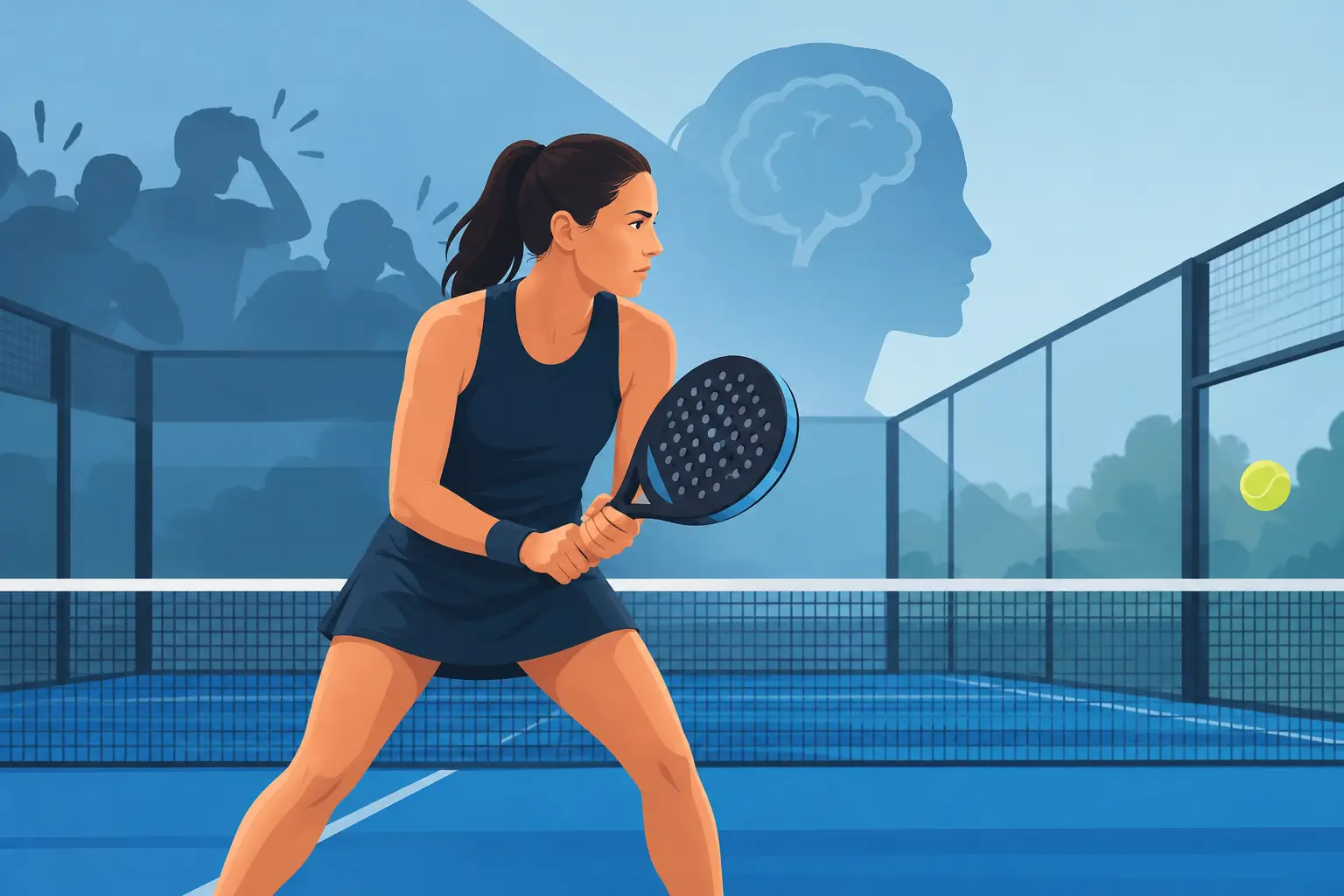
Watch what your game is telling you. If you are losing control under pressure, get into more group competition. If you keep missing the same shot, create private time to work on it properly. If motivation has dipped, bring your favourite people along and make the session about fun first.
The right choice is the one that gets you back on court, moving well, laughing loudly and wanting the next point. Start with the format that suits your week, then give the other one a go when your game is ready for a different kind of challenge.